Introduction
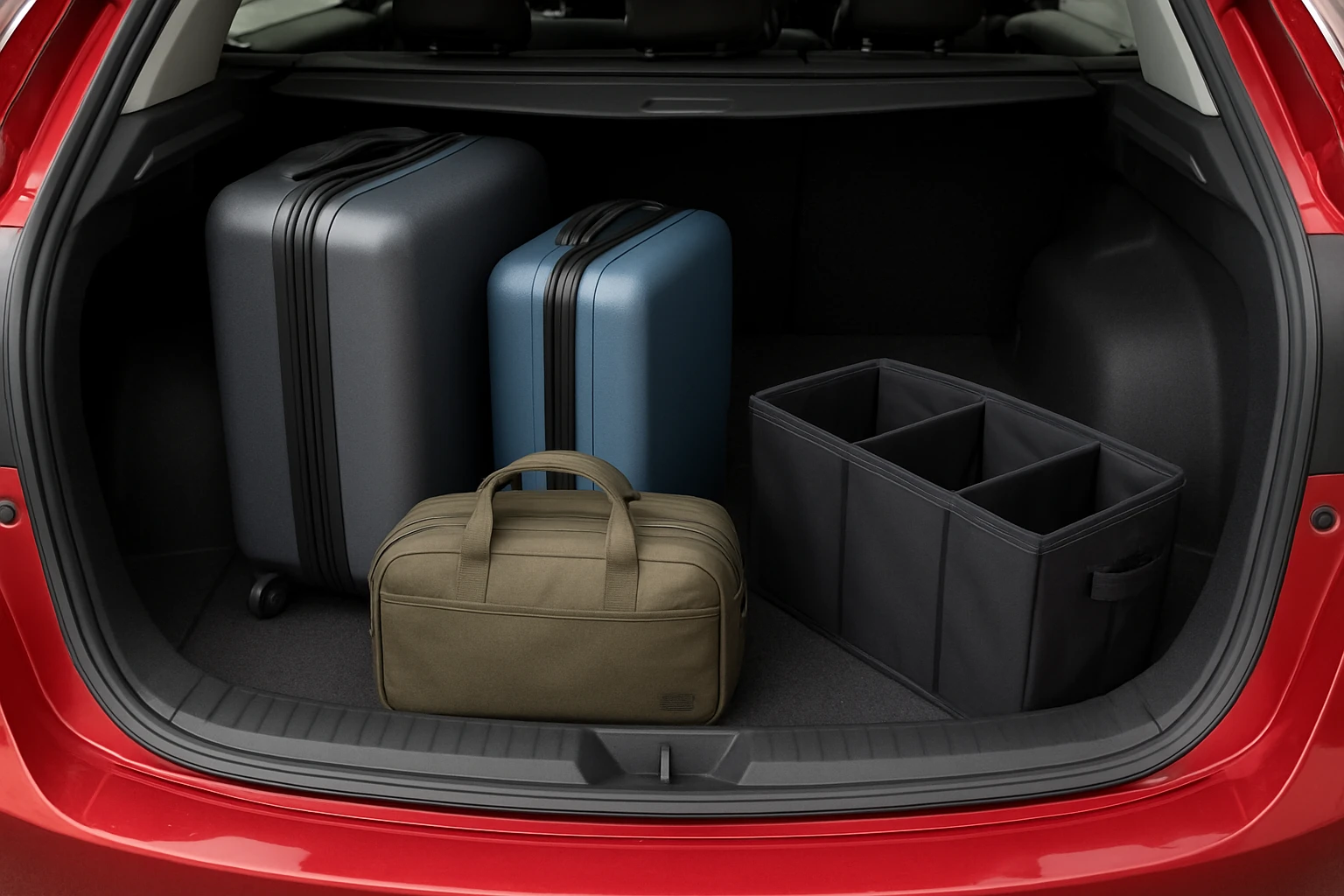
Traveling in a hatchback often presents the challenge of keeping luggage stable without the convenience of built‑in straps. This guide will teach the reader eight quick, strap‑free techniques that transform ordinary cargo areas into secure storage zones. Each method relies on readily available tools, some of which are highlighted as optional enhancements. By following the steps, one can enjoy a clutter‑free, damage‑free journey regardless of vehicle size.
What You’ll Need
- HOTOR Foldable Trunk Organizer - Blue Flower – sturdy, collapsible organizer with two compartments and six mesh pockets.
- HOTOR Trunk Organizer - Brown Leopard – similar design with five pockets and reflective safety strips.
- F‑color Pet Cargo Liner for SUVs - Grey – non‑slip, water‑resistant liner that can double as a friction pad for luggage.
- Reusable zip‑top bags, soft blankets, and a pair of rubberized non‑slip mats (optional).
Step 1: Assess Cargo Space and Distribute Weight
The first action is to open the hatch and visually map the available floor area, noting any wheel wells or seat backs that intrude. One should place the heaviest items, such as suitcases or toolboxes, closest to the vehicle’s center of gravity, typically near the floor and between the wheel arches. This distribution reduces the forward and side‑to‑side forces that cause shifting during acceleration or braking. By establishing a balanced layout, subsequent steps become more effective and require fewer supplemental devices.
Step 2: Use a Foldable Trunk Organizer for Structured Packing
Introducing a dedicated organizer creates defined compartments that keep items from colliding with each other. The HOTOR Foldable Trunk Organizer - Blue Flower offers two large compartments and six stretchy mesh pockets, providing ample space for groceries, tools, and travel accessories. Its Oxford cloth construction and reinforced stitching support over 60 lb, ensuring durability for repeated trips. The collapsible design allows the organizer to be folded flat when not in use, freeing valuable cargo space for larger luggage.
Step 3: Employ a Non‑Slip Cargo Liner to Prevent Sliding
Even with an organizer, lighter items may still shift if the floor surface is smooth. The F‑color Pet Cargo Liner for SUVs - Grey features a textured 45 × 54 inch anti‑slip rubber backing that creates friction between the trunk floor and any placed objects. Its four‑layer water‑resistant construction protects the vehicle interior from spills while adding a stable base for luggage. Because the liner folds to fit various dimensions, it can be trimmed to match the hatchback’s cargo area without excess bulk.
Step 4: Create Natural Barriers Using Seat‑Back Protectors
When the rear seats are folded down, the vertical surface of the seat backs can serve as a barrier that stops luggage from rolling forward. Placing a thin, rigid panel—such as a folded cardboard sheet or a reusable travel board—against the seat back creates a “stop‑gap” that maintains the position of bags placed behind it. This method requires no additional purchase, yet it mimics the function of a built‑in strap by providing a physical limit. Ensure the panel is secured with the vehicle’s existing hooks or the organizer’s side Velcro strips for added stability.
Step 5: Leverage Built‑In Vehicle Features (Hooks, Nets, and Cargo Nets)
Many hatchbacks include small cargo hooks or net attachments near the rear hatch. By threading a flexible cargo net through these anchors, one can create a tensioned sheet that holds items in place without traditional straps. If the vehicle lacks such hooks, the side Velcro strips on the HOTOR Trunk Organizer - Brown Leopard can be used to attach a lightweight net or elastic cord. The reflective stripes on this model also improve visibility during nighttime loading, adding a safety benefit beyond organization.
Step 6: Pack Soft Items Around Rigid Items to Fill Gaps
After positioning the heaviest suitcases, fill remaining voids with soft items such as blankets, travel pillows, or clothing bags. These pliable materials act as cushions that absorb movement and prevent rigid items from bumping against each other. By wrapping delicate electronics in a soft layer before placing them on top of sturdier luggage, one reduces the risk of damage from sudden stops. This technique also maximizes cargo capacity without the need for additional securing devices.
Step 7: Use Elastic Bungee Loops Integrated in Organizers
Both HOTOR organizers incorporate built‑in elastic loops that can be engaged to hold items against the side walls. To employ this feature, slide a suitcase or box into the compartment and pull the elastic loop over the top edge, creating gentle tension that resists forward motion. Unlike external straps, these loops are permanently attached to the organizer, eliminating the need for separate hardware. The loops are designed to accommodate items up to the organizer’s 60 lb capacity, making them suitable for most travel gear.
Step 8: Perform a Final Shake Test and Adjust as Needed
Before closing the hatch, gently shake the cargo area to simulate road vibrations. Observe any items that move or rattle, and reposition them using the previously described methods. If a particular bag continues to slide, consider adding an extra layer of the non‑slip liner beneath it or securing it with an organizer’s elastic loop. Completing this test ensures that the load will remain stable throughout the journey, reducing the likelihood of sudden shifts that could affect vehicle handling.
Tips & Pro Tips
- Use zip‑top bags for liquids and toiletries; they create a sealed container that does not spill even if the bag shifts.
- Place a thin rubber mat under the organizer to increase friction on very smooth trunk floors.
- When traveling with pets, the F‑color Pet Cargo Liner doubles as a protective barrier for both luggage and animal cargo.
- Label each compartment with a small tag to speed up unloading and to maintain organization on return trips.
Troubleshooting
Problem: Luggage continues to slide despite using a non‑slip liner.
Solution: Add a second layer of the liner or place a rubberized mat underneath; increase friction by securing the item with an organizer’s elastic loop.
Problem: Organizer shifts when the vehicle brakes sharply.
Solution: Engage the side Velcro strips fully and use the built‑in elastic loops to lock the heaviest items against the side walls.
Conclusion
The reader now possesses eight practical, strap‑free strategies to secure luggage in a hatchback, each supported by simple tools and thoughtful packing methods. By assessing weight distribution, employing foldable organizers, and utilizing non‑slip liners, one can achieve a stable cargo area without permanent straps. Implementing the tips and troubleshooting steps will further enhance safety and convenience on every trip. Apply these techniques to enjoy a smoother ride, protect personal belongings, and maximize the usable space of any hatchback.
Products Mentioned in This Guide
Frequently Asked Questions
What are the best strap‑free methods to keep luggage from shifting in a hatchback?
Use foldable trunk organizers, non‑slip cargo liners, and strategically placed items to create friction and compartmentalize cargo without straps.
Can a foldable trunk organizer replace traditional cargo straps?
Yes, a sturdy organizer with compartments and mesh pockets locks items in place and prevents movement during turns.
How does a non‑slip pet cargo liner help secure luggage?
The liner adds friction and a water‑resistant surface, keeping bags from sliding and protecting the trunk floor.
Do I need any special tools to secure luggage in a hatchback?
No special tools are required; everyday items like organizers, liners, and even rolled towels can provide the needed stability.
Are there safety concerns when transporting luggage without straps?
When cargo is properly compartmentalized and friction‑enhanced, it stays stable and reduces the risk of injury or vehicle damage.