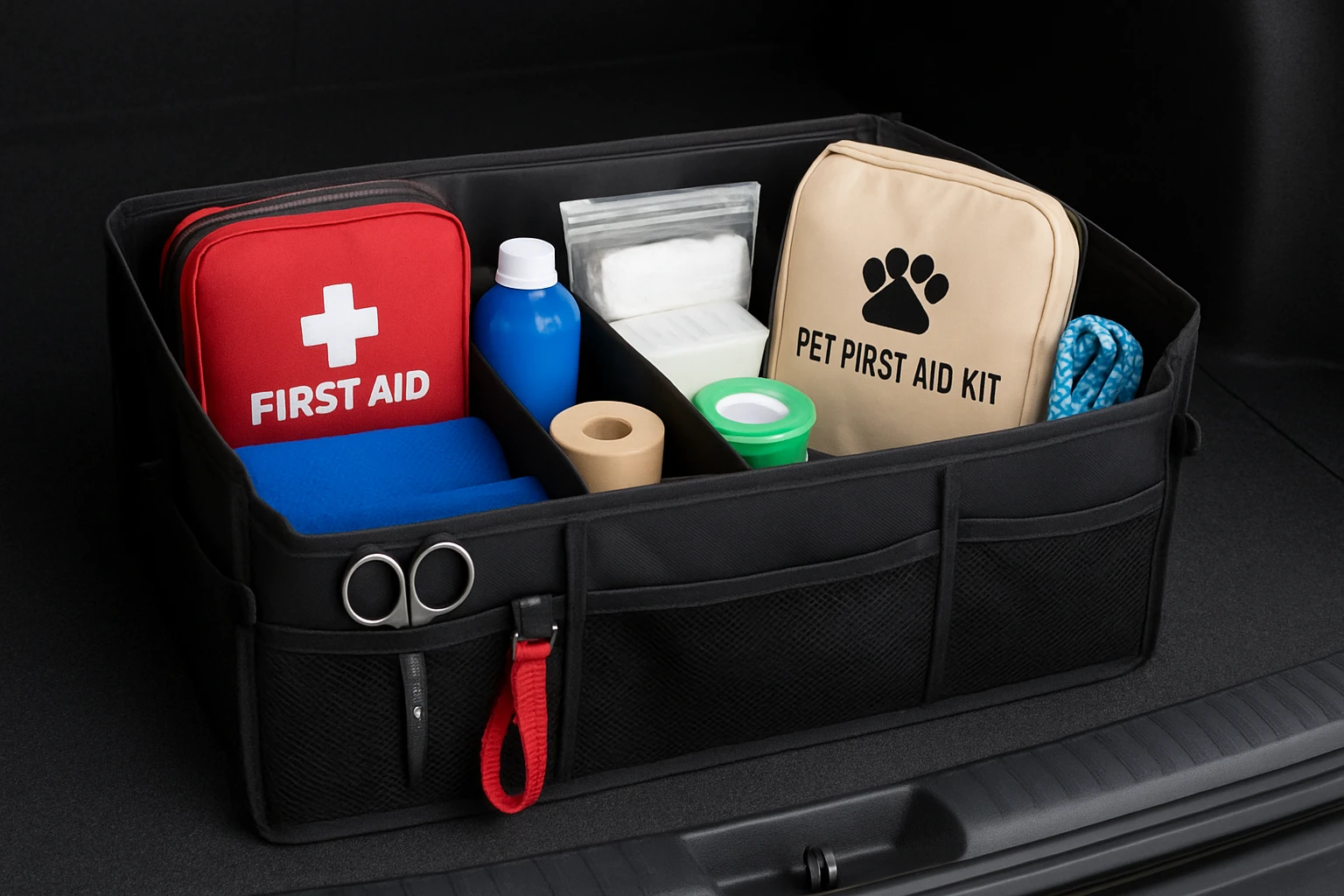
How to Build a DIY Pet First Aid Kit Trunk Organizer: Step‑by‑Step Emergency Prep for Road Trips
Introduction
Preparing for a road trip with a beloved animal companion requires more than just food and water. One must also consider emergency medical needs that may arise on the highway, in a campsite, or during a spontaneous hike. This guide will teach the reader how to construct a dedicated pet first aid kit that fits neatly inside a vehicle trunk organizer, ensuring that essential supplies are both protected and readily accessible. By following the systematic instructions, one will gain confidence that emergencies can be handled calmly and efficiently.
The value of a well‑organized kit lies in reduced response time, minimized stress for the pet, and the ability to provide professional‑grade care even in remote locations. The steps presented combine practical organization techniques with carefully selected products that have proven performance based on customer feedback. Even readers who choose not to purchase the recommended items will benefit from the underlying principles of layout, protection, and accessibility.
What You'll Need
- Ruffify Pet First Aid Kit – $33.99, 4.8/5 rating
- GPUSFAK Dog & Cat First Aid Kit – $17.99, 4.4/5 rating
- HOTOR Trunk Organizer – $12.99, 4.6/5 rating
- FORTEM Collapsible Trunk Organizer – $27.99, 4.7/5 rating
- Heavy‑duty zip ties, Velcro straps, and a permanent marker
- Scissors, small utility knife, and a notepad for inventory
Step 1: Choose the Ideal Trunk Organizer
The first physical component of the system is the trunk organizer itself. Two excellent options are available: the HOTOR Trunk Organizer and the FORTEM Collapsible Trunk Organizer. Both products feature multiple compartments, reinforced stitching, and a capacity that exceeds 60 lb, ensuring durability during long trips.
The HOTOR model offers two large compartments and six mesh pockets, providing clear visibility for each item. Its fold‑away design allows the organizer to be collapsed flat when not in use, saving valuable trunk space. The FORTEM version includes a rigid base, non‑slip strips, and adjustable securing straps that keep the organizer firmly in place even on curvy roads. Additionally, the removable lid offers an extra layer of privacy for valuable medical supplies.
For a traveler who values quick visual identification, the HOTOR organizer is the better choice because of its transparent mesh pockets. For a driver who frequently transports heavy tools alongside pet supplies, the FORTEM organizer provides superior stability. The decision should be based on the typical load distribution in the vehicle.
Once the organizer is selected, place it in the trunk and verify that it fits without obstructing the rear seat fold‑down mechanism. Adjust the side Velcro strips or the securing straps until the unit sits flush against the trunk walls.
Step 2: Select a Comprehensive Pet First‑Aid Kit
Two pet‑specific kits have been identified as complementary. The Ruffify Pet First Aid Kit is a vet‑approved collection of 27 essential items, including a slip leash, blanket, thermometer, and paw bandage. Its bright reflective yellow case ensures that the kit is visible even in low‑light conditions, a critical feature during night‑time emergencies.
The GPUSFAK kit focuses on versatility and includes additional accessories such as empty spray bottles, a pill box, a collapsible water bowl, and a trash bag. This broader assortment is valuable for owners who wish to combine emergency care with routine daily pet maintenance while traveling.
Both kits have received high customer ratings (4.8 and 4.4 respectively) and are priced affordably. By pairing the Ruffify kit for core medical needs with the GPUSFAK kit for supplemental care, one creates a layered approach that covers both immediate injuries and ongoing health monitoring.
Open each kit and inventory the contents on a clean surface. Use a notepad to record any missing items so that they can be purchased separately before departure.
Step 3: Prepare the Organizer Compartments
Begin by emptying the chosen trunk organizer and laying it flat on the ground. Identify the two largest compartments; these will house the primary medical supplies. The smaller mesh pockets are ideal for quick‑access items such as gauze pads, antiseptic wipes, and a digital thermometer.
Using zip ties or Velcro straps, create internal dividers within each compartment. This prevents the kits from shifting when the vehicle accelerates or brakes. For example, place a thin piece of cardboard between the Ruffify kit and the GPUSFAK kit, then secure it with a zip tie to keep the two kits from rubbing against each other.
Label each compartment with a permanent marker. Write “Medical Kit – Ruffify” on the larger compartment and “Supplemental Care – GPUSFAK” on the adjacent one. Clear labeling reduces the time spent searching for a specific item during a stressful situation.
Finally, place the removable lid from the FORTEM organizer (if used) over the top compartment to protect the supplies from dust and sunlight.
Step 4: Pack the First‑Aid Kits Efficiently
Start with the Ruffify Pet First Aid Kit. Arrange the larger items—such as the blanket, slip leash, and paw bandage—against the back wall of the compartment. Smaller items like the thermometer, tweezers, and bandage scissors should be placed in the front so they are visible without opening the entire kit.
Next, pack the GPUSFAK kit. Position the empty spray bottles, pill box, and collapsible water bowl along the side of the compartment where they will not interfere with the Ruffify items. The mesh pockets are perfect for storing the plastic clips, tongue depressors, and extra gauze rolls.
Insert a small, waterproof pouch (included in the Ruffify kit) into one of the mesh pockets to hold any medication that must remain dry. This extra layer of protection is especially useful in humid climates or during rainy hikes.
Close each compartment and gently press down to ensure a snug fit. Verify that the organizer’s handles are accessible for lifting and that the overall weight does not exceed the 60 lb limit indicated by the manufacturer.
Step 5: Secure the Organizer in the Vehicle
Slide the fully packed organizer into the trunk, positioning it against the rear wall. If using the FORTEM model, engage the non‑slip strips and tighten the adjustable straps so that the organizer does not slide during sudden stops. For the HOTOR model, ensure that the Velcro side strips are fastened to keep the unit from shifting.
Test the stability by gently pulling on the organizer’s handles. The unit should remain firmly in place. If any movement is detected, add additional zip ties or reposition the internal dividers.
Place a small flashlight or a headlamp within easy reach of the organizer’s exterior. In low‑light conditions, a quick illumination source can make the difference between a calm response and a panicked scramble.
Finally, store a copy of the pet’s medical records, vaccination certificates, and emergency contact numbers in a sealed plastic sleeve attached to the outside of the organizer. This ensures that vital information travels with the kit.
Step 6: Test Accessibility and Make Adjustments
Before embarking on a long journey, simulate an emergency scenario. Open the organizer, retrieve the thermometer, apply a bandage, and close the compartment again. This rehearsal confirms that each item is reachable within a few seconds.
Adjust any items that feel difficult to reach. For example, if the gauze rolls are buried behind the water bowl, reposition them to the front mesh pocket. The goal is to create a logical flow that mirrors the order of typical first‑aid procedures.
Record any changes made during the test in the notepad inventory. Maintaining an up‑to‑date list simplifies future restocking after each trip.
Repeat the test after the vehicle has been driven for a short distance, as vibrations can cause items to shift. Minor tweaks after the first few miles are normal and improve long‑term reliability.
Tips & Pro Tips
- Keep a spare set of the most critical items (e.g., gauze, antiseptic wipes) in the vehicle’s glove compartment for immediate access.
- Replace any used or expired supplies after each trip. Many first‑aid items have a limited shelf life, especially sterile dressings.
- Consider adding a compact pet CPR mask to the Ruffify kit for advanced emergency response.
- Use color‑coded zip ties—red for medical supplies, blue for supplemental items—to reinforce visual organization.
- Store the organizer in a climate‑controlled area of the vehicle when possible; extreme heat can degrade certain medications.
Troubleshooting
Problem: The organizer slides during sharp turns.
Solution: Reinforce the non‑slip strips with additional Velcro tape or secure the organizer to a fixed anchor point using heavy‑duty straps.
Problem: Items become difficult to locate after several trips.
Solution: Conduct a quarterly inventory check, replace worn dividers, and re‑label compartments with fresh marker ink.
Problem: The first‑aid kit feels too bulky for the chosen organizer.
Solution: Evaluate whether both kits are necessary for the specific trip length. For short day trips, the GPUSFAK kit alone may suffice, freeing space for other travel gear.
Conclusion
By following the steps outlined in this guide, one can construct a reliable, road‑ready pet first‑aid kit that resides securely within a trunk organizer. The combination of a sturdy organizer, a vet‑approved medical kit, and a supplemental care kit creates a comprehensive solution that addresses both emergency treatment and routine pet health needs. Regular testing, inventory management, and occasional adjustments will keep the system functional for countless adventures.
Readers are encouraged to implement these practices on their next road trip, confident that they are prepared to protect their animal companions in any unexpected situation.
Products Mentioned in This Guide
Frequently Asked Questions
What essential items belong in a DIY pet first aid kit for road trips?
Include bandages, antiseptic wipes, tweezers, a digital thermometer, emergency medication, and a portable water bowl.
How should I arrange the supplies inside a trunk organizer?
Use labeled compartments or zip‑lock bags for categories like wound care, medication, and comfort items to enable quick access.
What container protects medical supplies from temperature extremes in the trunk?
A insulated, waterproof tote or a hard‑sided cooler box keeps items stable in hot or cold weather.
How often should I inspect and restock my pet first aid kit?
Check the kit before each trip and replace expired items every six months or after use.
Can the kit be customized for different pets or specific health needs?
Yes, add breed‑specific medication, allergy treatments, or extra comfort items like a calming spray as needed.