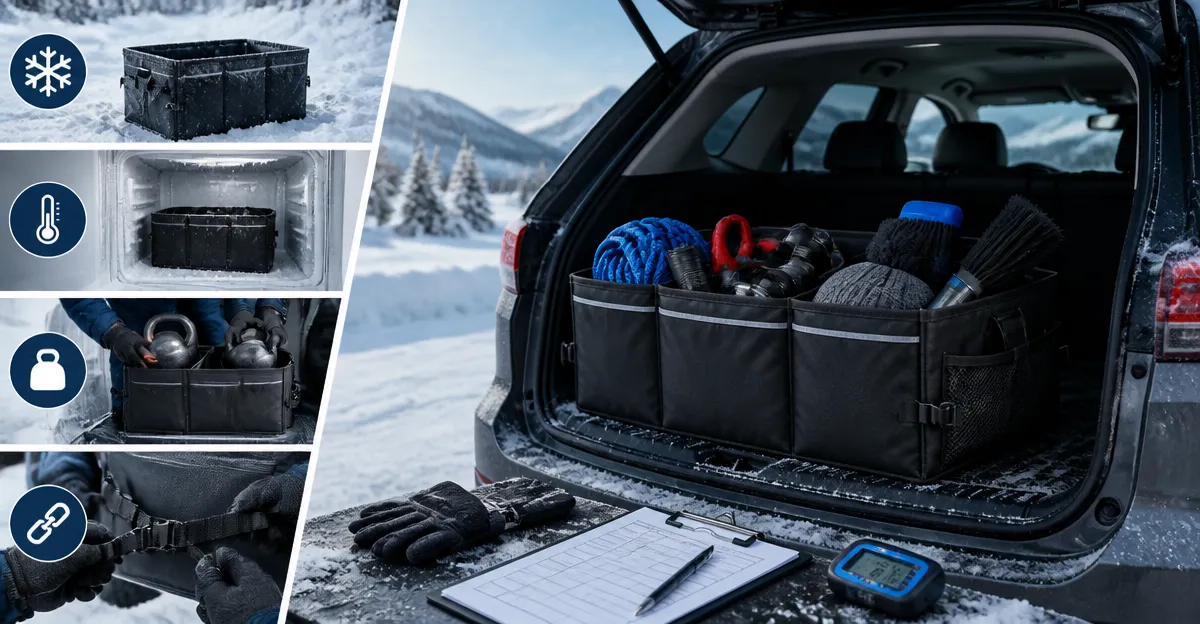
How to Test Trunk Organizer Durability in Extreme Cold: A Step-by-Step Winter Stress-Test Guide
Introduction
Cold weather can expose hidden weaknesses in vehicle storage solutions, especially when plastic components become brittle and fabrics lose their water‑repellent properties. This guide teaches readers how to evaluate the structural integrity of trunk organizers under sub‑zero temperatures, using repeatable methods that produce reliable data. By following the procedure, one can determine whether an organizer will survive winter road trips, frozen grocery hauls, or emergency supply storage. The information is valuable for consumers, automotive enthusiasts, and retailers who want to verify product claims before purchase.
What You’ll Need
- One or more trunk organizers to test (examples are listed below).
- Digital freezer‑grade thermometer (range –40 °F to 150 °F).
- Adjustable cargo straps or zip ties to secure the organizer.
- Weighted items such as sandbags or water‑filled containers (totaling 30‑60 lb).
- Portable vibration platform or a simple DIY rig using a motorized shaker.
- Protective gloves, safety glasses, and a notebook for observations.
All of the organizers mentioned are available on Amazon and include features that make them suitable for winter testing, such as waterproof Oxford fabric, non‑slip bases, and reinforced stitching.
Step 1: Choose the Organizer and Record Baseline Data
Begin by selecting a trunk organizer that you intend to evaluate. For this guide, three popular models are highlighted: Femuar Trunk Organizer, Gorilla Grip Trunk Organizer, and Sposuit 70L Trunk Organizer. Record the product’s price, rating, and key specifications before testing. For example, the Femuar organizer costs $9.99, carries a 4.7‑star rating from 5,461 reviews, and features 600D Oxford fabric with a collapsible design. This baseline information provides context for later comparisons and helps readers understand the value proposition of each model.
Measure the organizer’s dimensions with a tape measure and note the weight of the empty unit. Photograph the organizer from multiple angles to capture its condition prior to exposure. These records serve as a reference point when assessing deformation, stitching failures, or material cracking after the cold‑stress cycle.
Step 2: Load the Organizer with Representative Weight
Fill the organizer with weighted items that simulate typical cargo. Use sandbags or water bottles to reach a total load of 40 lb for a compact SUV or 60 lb for a larger truck. Distribute the weight evenly across the main compartments, ensuring that the removable divider (if present) is positioned as it would be in everyday use. The Gorilla Grip model, priced at $34.99 with a 4.8‑star rating, includes an extra divider that allows you to create smaller sections for heavy tools; this feature is particularly useful for testing load‑bearing capacity.
Secure the loaded organizer with the built‑in cargo straps or attach external zip ties to prevent shifting during the freeze‑thaw cycle. Record the exact weight placed in each compartment, as this data will help you correlate any structural failures with specific load points. The Sposuit 70L organizer, priced at $20.69 and rated 4.8 stars, offers eleven pockets that can be filled with smaller items to mimic a realistic mix of groceries, sports gear, and emergency supplies.
Step 3: Place the Organizer in a Controlled Freezer Environment
Transfer the secured organizer to a freezer that can maintain a constant temperature of –20 °F (–28 °C) or lower. Use a digital thermometer to verify the temperature stability for at least two hours before inserting the organizer. This step replicates the extreme cold that many drivers encounter in northern climates during winter evenings.
Leave the organizer in the freezer for a minimum of 24 hours to allow the fabric, stitching, and plastic components to reach thermal equilibrium. The Femuar Trunk Organizer’s waterproof 600D Oxford fabric is designed to resist moisture absorption, but prolonged exposure to sub‑zero temperatures can cause the coating to become rigid and prone to cracking. Monitoring the temperature throughout the test ensures that any observed damage is attributable to cold stress rather than temperature fluctuations.
Step 4: Simulate Vibration and Impact While Frozen
After the cold soak, remove the organizer while wearing insulated gloves and place it on a vibration platform set to a frequency of 20 Hz for 10 minutes. This simulates the continuous vibrations experienced during highway travel. If a professional shaker is unavailable, a DIY rig using a motorized drill with an offset weight can generate comparable motion.
During vibration, observe whether the non‑slip bottom (Velcro on the Femuar model, nonskid feet on the Gorilla Grip model) maintains contact with the platform or lifts, which would indicate reduced grip in cold conditions. The Gorilla Grip’s corrugated plastic panels are engineered to stay rigid at low temperatures, and the product’s 4.8‑star rating suggests users have not reported cold‑related slippage. Document any audible cracks, fabric tearing, or seam separation that occurs during this phase.
Step 5: Thaw, Inspect, and Document Results
Allow the organizer to return to room temperature gradually by moving it to a neutral indoor environment for one hour. Rapid warming can cause condensation that masks true material damage, so a slow thaw is essential for accurate assessment. Once the organizer is fully thawed, conduct a visual inspection of all seams, handles, and dividers.
Compare post‑test photographs with the baseline images captured in Step 1. Look for signs of fabric brittleness, such as micro‑tears in the 600D Oxford material, or deformation of the rigid plastic panels in the Gorilla Grip model. Test the functionality of the Velcro non‑slip bottom by pulling the organizer across a smooth surface; a loss of adhesion indicates that the adhesive has degraded under cold stress. Record each observation in a structured table that includes organizer name, pre‑test condition, post‑test condition, and a pass/fail recommendation.
Tips & Pro Tips
- Use a freezer that can reach at least –30 °F for the most rigorous test; many household freezers only achieve –10 °F, which may not fully challenge the material.
- When loading weight, place heavier items near the base to mimic real‑world loading patterns and to test the reinforced bottom plates of the FORTEM Foldable Trunk Organizer ($27.99, 4.7‑star rating).
- Apply a thin layer of silicone spray to the Velcro strips before the cold soak to assess whether lubrication improves low‑temperature grip.
- Document temperature changes with a data logger if available; this provides a precise timeline for any failures that occur.
- Consider repeating the freeze‑vibration‑thaw cycle three times to evaluate long‑term durability.
Troubleshooting
Problem: Organizer slides on the vibration platform despite non‑slip features.
Solution: Verify that the platform surface is clean and dry. Apply additional cargo straps to secure the organizer’s corners, or use a rubber mat to increase friction.
Problem: Fabric tears appear after the first freeze.
Solution: Reduce the load weight and ensure the divider is not over‑compressed. Some thinner fabrics, such as those on budget models, may require a lower temperature threshold for testing.
Conclusion
This guide has outlined a systematic approach to testing trunk organizer durability in extreme cold, from selecting the product to documenting post‑test performance. By following each step, readers can make informed purchasing decisions based on objective evidence rather than marketing claims. The recommended organizers—Femuar, Gorilla Grip, Sposuit, FORTEM, and Deosk—each offer unique strengths that can be validated through the described winter stress‑test. Armed with these insights, consumers can confidently equip their vehicles for the harshest winter conditions.
Products Mentioned in This Guide
Frequently Asked Questions
Why does extreme cold affect trunk organizer durability?
Low temperatures can make plastic components brittle and reduce fabric water‑repellency, leading to cracks or tears under load.
What temperature range should be used for a winter stress test?
Test the organizer at sub‑zero temperatures, ideally between -20 °F and 0 °F, to simulate typical winter conditions.
How much weight is recommended for the cold‑weather load test?
Secure 30–60 lb of weight (e.g., sandbags or water containers) to mimic real‑world cargo stress.
Do I need a vibration platform for the test?
A portable vibration platform or a DIY motorized shaker helps replicate road vibrations that can exacerbate cold‑induced brittleness.
What safety gear should I wear while conducting the test?
Wear protective gloves and safety glasses to guard against sharp edges or sudden material failure.