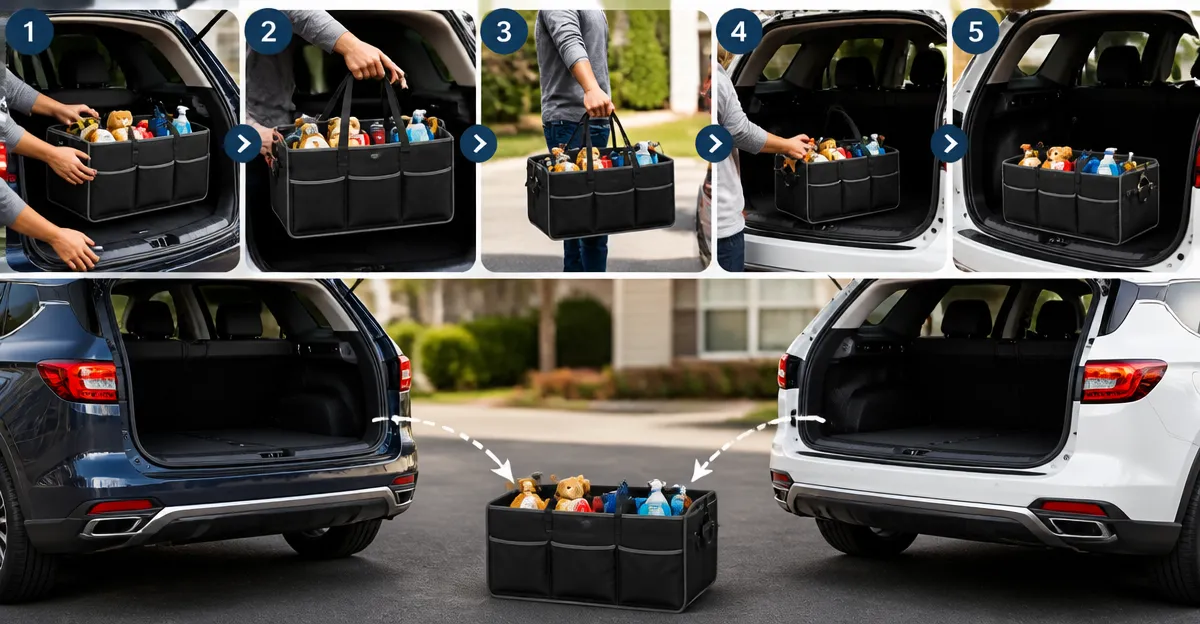
How to Quickly Transfer a Trunk Organizer Between Family Cars: 5 Simple Steps to Do It in Minutes
Introduction
Family life often requires swapping vehicles for errands, road trips, or car‑sharing arrangements. One common challenge is moving a trunk organizer from one car to another without losing items or creating a mess. This guide teaches readers how to complete the transfer in minutes, preserving organization and protecting groceries, tools, or emergency supplies. By following five clearly defined steps, one can maintain a tidy cargo area, reduce the risk of items shifting during travel, and avoid the frustration of re‑packing every time a vehicle changes. The methods described rely on highly rated, collapsible organizers that combine durability with ease of handling.
What You’ll Need
- One sturdy, collapsible trunk organizer (recommended options are listed below).
- Two adjustable strap sets or Velcro strips (often included with the organizer).
- A soft cleaning cloth and mild spray cleaner for quick surface preparation.
- A lightweight dolly or sturdy hand‑cart if the organizer is fully loaded.
All of the required tools are either built into the organizer or can be found around the home, ensuring that the transfer does not demand specialized equipment.
Step 1: Prepare Both Vehicles
Begin by parking the source and destination cars side by side, preferably on a flat surface to prevent any rolling. Open each trunk fully and remove any loose items that could interfere with the organizer’s placement. Use a Sposuit Trunk Organizer to test the available space; its dimensions of 23.6" L × 14.6" W × 12.2" H make it suitable for most sedans and SUVs. The organizer’s 70‑liter capacity provides ample room for groceries, sports gear, or emergency kits while its collapsible design allows it to fit into tight spaces during the preparation phase.
Inspect the trunk floors of both vehicles for debris or moisture. A quick wipe with a damp cloth will ensure that the non‑slip strips on the organizer’s base remain effective. The Sposuit model features 600D Oxford polyester, a material praised for abrasion resistance and easy cleaning, which helps maintain a clean surface during the move.
While the source vehicle’s trunk is being cleared, verify that the destination vehicle’s cargo area can accommodate the organizer’s footprint. The AOPHY Trunk Organizer measures 35.5" D × 13.7" W × 11.8" H and expands to 95 L, offering a larger option for bigger families or those who need extra compartments. Its adjustable dividers and six mesh pockets provide flexibility for varied loads.
Confirm that both vehicles have functioning latch mechanisms for the organizer’s Velcro straps. Properly secured straps prevent the organizer from sliding during transport, a feature highlighted in the AOPHY product description and reinforced by its non‑slip magic stripes.
Step 2: Empty and Secure the Organizer
Before moving the organizer, empty its compartments completely. This reduces weight, making it easier to lift and fold. Place items on a nearby surface to keep them organized; many users find that the side pockets of the FORTEM Trunk Organizer (27.99) are ideal for temporary storage of smaller objects such as keys, chargers, or first‑aid supplies.
Once emptied, engage the Velcro closures on the organizer’s sides. The Sposuit organizer’s Velcro system secures the unit in place, while the FORTEM model adds rigid base plates for additional stability. Both designs receive high marks for durability, with the Sposuit rated 4.8/5 from 3,985 reviews and the FORTEM receiving a 4.7/5 rating from over 51,000 reviewers.
If the organizer includes removable lids, collapse them now to reduce bulk. The FORTEM’s detachable lid offers a discreet way to keep items out of sight, a benefit for those who value privacy or wish to protect delicate goods from sunlight.
Finally, fold the organizer along its built‑in creases. The Sposuit and HOTOR models both fold flat, allowing the user to handle the unit with one hand when the load is light. This step prepares the organizer for a swift transition between vehicles.
Step 3: Detach and Transport the Organizer
Lift the folded organizer using the reinforced handles found on most models. The Sposuit organizer’s handles are described as sturdy, enabling easy removal even when the unit is fully loaded. For heavier loads, consider the HOTOR Trunk Organizer, which supports over 60 lb due to its thickened base panel and reinforced stitching.
Carry the organizer to the destination vehicle, keeping it upright to prevent any residual items from shifting. If the load is particularly heavy, a lightweight dolly can be employed, but this is rarely necessary given the organizer’s collapsible nature.
During transport, keep the organizer’s side Velcro strips disengaged to avoid snagging on clothing or other objects. The AOPHY model’s adjustable straps can be temporarily loosened, allowing the unit to rest securely on the floor of the passenger seat if additional space is needed.
Place the organizer near the trunk opening of the destination vehicle, ready for the next step. At this point, the user should have a clear view of the vehicle’s interior layout, ensuring the organizer will sit flush against the rear wall.
Step 4: Position and Secure in the New Car
Unfold the organizer inside the destination trunk, aligning the base plates with the floor. The FORTEM organizer’s rigid base plates prevent the unit from collapsing under weight, a feature that many reviewers cite as essential for long trips. Position the unit so that its larger compartment faces the rear wall, maximizing usable space.
Secure the organizer using the built‑in non‑slip strips. Both the AOPHY and FORTEM models include these strips, which grip carpeted or rubberized trunk floors effectively. For added security, fasten the adjustable strap sets around the organizer’s side panels and attach them to the vehicle’s anchor points, as recommended by the AOPHY product description.
Arrange items back into the organizer, taking advantage of the side pockets and mesh compartments. The Sposuit organizer offers eight cloth pockets and three large mesh pockets, ideal for separating groceries, tools, and personal items. The HOTOR organizer adds six stretchy mesh pockets, providing quick visual access to frequently used items.
Close any Velcro closures and, if applicable, reattach the removable lid. This finalizes the setup, ensuring that the organizer remains stable during acceleration, braking, or cornering.
Step 5: Verify Stability and Make Final Adjustments
Before driving, perform a brief stability test. Gently push the organizer forward and backward; it should remain firmly in place thanks to the non‑slip strips and strap system. If any movement is detected, tighten the straps or reposition the base plates.
Check that all items are seated securely within the compartments. Items that are too large for a pocket should be placed in the main compartment to avoid shifting. The FORTEM organizer’s lid can conceal valuables, reducing the chance of theft when the vehicle is parked.
Finally, close the trunk and take a short test drive around the block. Listen for rattling noises; a quiet ride indicates that the organizer is properly secured. If any noise persists, re‑examine the Velcro closures and strap tension.
By following these five steps, one can transfer a trunk organizer between family cars in under ten minutes, preserving order and safety without the need for extensive repacking.
Tips & Pro Tips
- Label compartments with removable tags to speed up future packing.
- Use zip‑top bags for liquids to prevent spills from reaching other items.
- Rotate the organizer periodically to evenly distribute wear on the 600D Oxford fabric.
- Keep a spare set of Velcro strips in the glove compartment for quick repairs.
- Consider a dual‑organizer setup in larger SUVs; the interlocking buckles on the FORTEM (27.99) model allow two units to be connected for expanded storage.
Troubleshooting
| Problem | Solution |
|---|---|
| Organizer slides during sharp turns. | Re‑tighten the adjustable straps and ensure non‑slip strips are clean and fully pressed against the trunk floor. |
| Pockets tear after heavy use. | Distribute weight evenly across compartments; avoid overloading any single pocket beyond the 60 lb capacity noted for the HOTOR model. |
| Velcro loses grip over time. | Clean the Velcro with a soft brush and replace with a new strip if necessary; most organizers include spare strips. |
Conclusion
The ability to move a trunk organizer quickly between family cars enhances convenience, safety, and overall vehicle organization. By preparing both vehicles, emptying and securing the organizer, transporting it safely, positioning it correctly, and verifying stability, one can accomplish the transfer in minutes rather than hours. The recommended products—Sposuit, AOPHY, FORTEM, and HOTOR organizers—provide a range of capacities, durability, and price points, ensuring that every household can find a suitable tool for the task. Implement the tips and troubleshooting advice to maintain long‑term performance, and enjoy a clutter‑free trunk wherever you travel.
Frequently Asked Questions
What is the quickest way to move a loaded trunk organizer between cars?
Use a lightweight dolly or hand‑cart to roll the organizer, then secure it with the adjustable straps before placing it in the new trunk.
Do I need to clean the trunk before transferring the organizer?
Yes, a quick wipe with a soft cloth and mild spray cleaner prevents dirt from transferring to the organizer and its contents.
Can a collapsible trunk organizer be transferred without disassembling it?
If it’s fully collapsible, you can fold it flat, strap it down, and carry it without removing the items, though unloading heavy items is safer.
How do I keep items from shifting during the transfer?
Secure the organizer with the included Velcro strips or strap sets to both the dolly and the new vehicle’s cargo anchors.
What features should I look for in a trunk organizer for easy transfers?
Choose a sturdy, collapsible design with built-in handles, adjustable straps, and a lightweight frame to simplify moving and re‑installing.