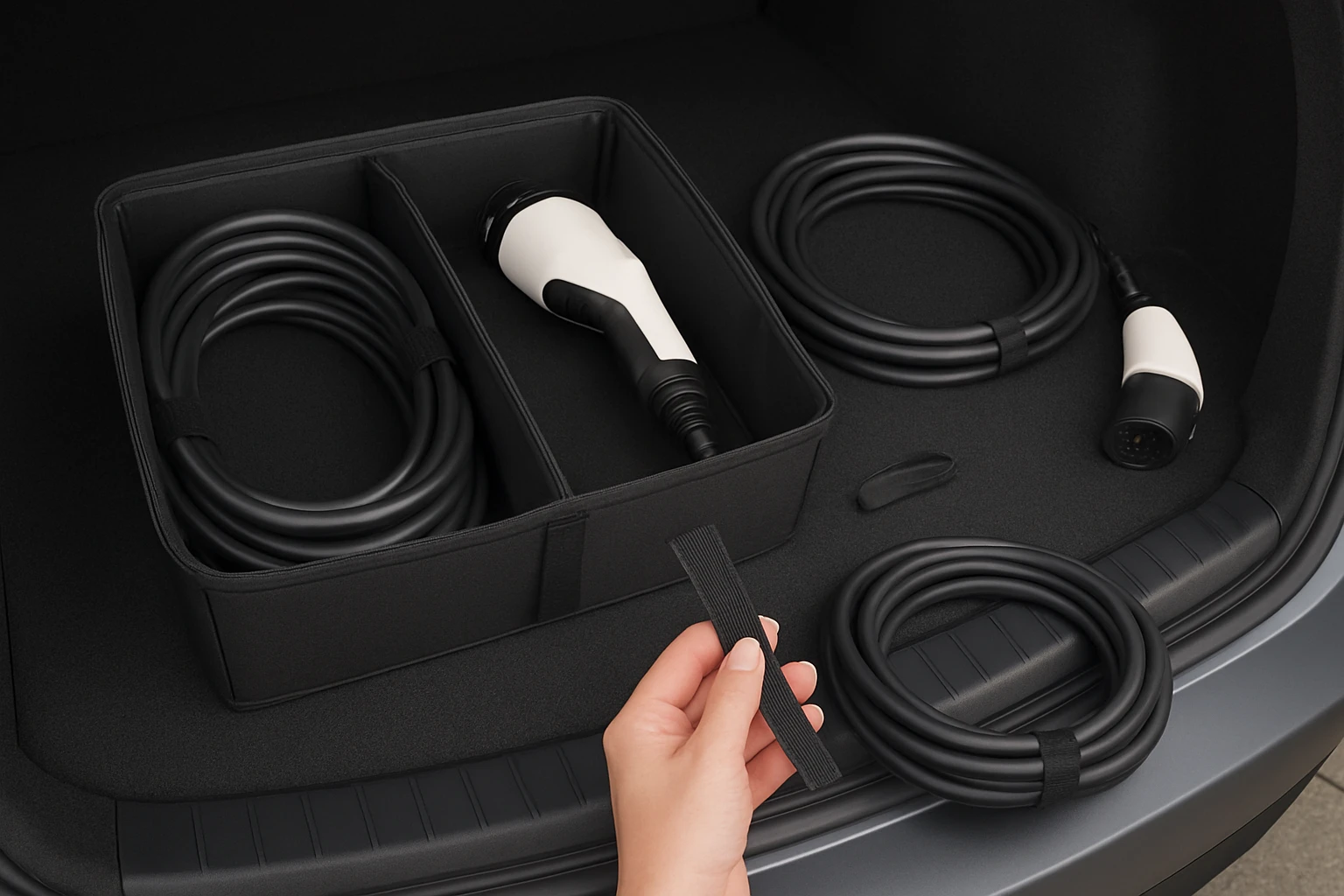
How to Organize EV Charging Cables in Your Trunk: DIY Trunk Organizer + Installation Tips
Introduction
One often overlooks the importance of a well‑organized trunk when managing electric vehicle (EV) charging cables, yet a tidy storage solution can prevent damage, improve safety, and streamline daily routines. This guide explains how to assess trunk space, select appropriate organizers, install them securely, and manage cables with reusable ties, ensuring that the charging equipment remains protected and readily accessible. Readers will gain practical knowledge that applies to any sedan, SUV, or hatchback, regardless of whether they own a compact city car or a larger family vehicle. By following the steps, one can transform a chaotic cargo area into a functional, professional‑grade storage system.
What You'll Need
The following materials and tools are recommended for optimal results; however, the project can be completed with basic household items if necessary. Each product listed below has been selected for its durability, user reviews, and price‑performance ratio.
- HOTOR Collapsible Trunk Organizer – 69 L capacity, built‑in leak‑proof cooler, adjustable Velcro sides, $19.98, 4.7/5 rating.
- Simple Deluxe Trunk Organizer – 50 L capacity, waterproof 600D Oxford fabric, non‑slip bottom, $12.99, 4.7/5 rating.
- Femuar Leopard Print Trunk Organizer – collapsible, waterproof, stylish pattern, $19.99, 4.7/5 rating.
- High Road CargoCube Car Bin – modular bin with metal handles, leak‑proof liner, $26.99, 4.7/5 rating.
- Nettbe Reusable Cable Ties – 60 pcs, nylon hook‑and‑loop, $6.48, 4.8/5 rating.
- Measuring tape, scissors or utility knife, and a soft cleaning cloth.
Step‑by‑Step Instructions
Step 1: Measure and Evaluate Trunk Space
Begin by measuring the length, width, and depth of the trunk using a measuring tape; record the dimensions in centimeters for precision. One should note any protruding wheel wells, spare‑tire wells, or built‑in compartments that may limit usable area. This information will guide the selection of an organizer that fits without obstructing the rear seats or the vehicle’s safety mechanisms. A clear sketch of the trunk layout helps visualize where the charging cable coil will reside alongside other essential items.
Step 2: Choose an Organizer That Matches the Dimensions
If the trunk measurement exceeds 30 inches in length, the HOTOR Collapsible Trunk Organizer provides ample 69 L capacity and adjustable Velcro strips that can be resized to fit larger compartments. Its built‑in cooler compartment is useful for storing temperature‑sensitive accessories such as portable chargers or snacks during long trips. For smaller trunks or budget‑conscious users, the Simple Deluxe Trunk Organizer offers 50 L of storage, waterproof 600D Oxford fabric, and a non‑slip bottom that prevents movement during sudden braking. If aesthetic appeal is a priority, the Femuar Leopard Print Trunk Organizer combines style with functionality, featuring collapsible compartments and a waterproof liner. Finally, for modular flexibility, the High Road CargoCube Car Bin can be positioned on the floor or seat, offering a sturdy metal‑handle design and a removable bottom panel for stability.
Step 3: Prepare the Organizer and Install It Securely
Unfold the chosen organizer on a clean surface and verify that all Velcro straps, handles, and compartments are intact. For the HOTOR model, adjust the side Velcro strips to the desired width; the product offers four size configurations, allowing one to collapse it to a compact 2‑inch profile when not in use. Place the organizer in the trunk, aligning the base panel with the floor to distribute weight evenly. Secure the non‑slip bottom (present on Simple Deluxe, Femuar, and High Road models) by pressing it firmly against the carpet, ensuring that the organizer does not shift during acceleration or cornering. If the organizer includes reinforced handles, use them to lift the unit into place, reducing strain on the user’s back.
Step 4: Coil and Secure the EV Charging Cable
Wrap the charging cable using the “over‑under” technique to prevent kinks and maintain an even tension throughout the coil; this method reduces internal stress and prolongs the cable’s lifespan. Once coiled, position the loop inside the organizer’s largest compartment, preferably near the rear of the trunk where it will not interfere with the vehicle’s rear‑view camera or spare‑tire access. Use the Nettbe Reusable Cable Ties to bind the coil; each tie can be tightened by hand and released without cutting, allowing quick adjustments when the cable length changes. Apply one tie around the middle of the coil and a second tie near the connector end to keep the cable from unravelling during transport.
Step 5: Allocate Space for Accessories and Emergency Items
Many EV owners carry additional accessories such as adapters, portable chargers, or a small first‑aid kit. The built‑in cooler compartment of the HOTOR organizer can store these items while keeping them insulated from heat, a valuable feature during summer road trips. For organizers without a dedicated cooler, use a separate insulated bag placed in a side pocket; the Simple Deluxe and Femuar models include multiple side pockets that are ideal for this purpose. Ensure that heavier items are positioned at the bottom of the organizer to lower the center of gravity, thereby enhancing vehicle stability.
Step 6: Test Stability and Adjust as Needed
After loading the cable and accessories, close the trunk and gently shake it to simulate driving conditions; observe whether the organizer or its contents shift. If movement is detected, reposition the non‑slip bottom or add additional Nettbe Reusable Cable Ties around the organizer’s frame to secure it to the trunk lip. For modular bins like the High Road CargoCube, use the built‑in hook‑and‑loop grips to attach the bin to the trunk floor, preventing sliding during abrupt stops. Once stability is confirmed, one may proceed to use the vehicle normally, confident that the charging cable will remain organized and protected.
Tips & Pro Tips
- Label each compartment with a small waterproof label to quickly identify where the cable, adapters, or emergency items are stored.
- Periodically inspect the cable ties for wear; replace them if the hook‑and‑loop surface loses adhesion.
- When traveling in extreme temperatures, store the charging cable away from direct sunlight; the cooler compartment of the HOTOR organizer can mitigate heat buildup.
- Consider adding a small LED strip inside the organizer for illumination; this aids in locating the cable at night without opening the trunk fully.
- If the vehicle has a built‑in trunk organizer rail system, attach the High Road CargoCube using its metal handles for a more permanent solution.
Troubleshooting
Problem: The cable becomes tangled after repeated trips.
Solution: Re‑coil the cable using the over‑under method and replace any worn Nettbe Reusable Cable Ties with fresh ones to maintain secure binding.
Problem: Organizer slides despite non‑slip bottom.
Solution: Apply a thin layer of silicone spray to the trunk floor to increase friction, or secure the organizer with additional Velcro strips that attach to the vehicle’s interior panels.
Problem: The cooler compartment leaks moisture onto the trunk floor.
Solution: Ensure that the cooler’s PEVA lining is fully sealed before placing wet items; wipe any excess moisture with a dry cloth immediately.
Conclusion
One has now learned how to evaluate trunk dimensions, select a suitable organizer, install it securely, and manage EV charging cables with reusable ties, resulting in a safe and efficient storage solution. By following the detailed steps, the risk of cable damage, tripping hazards, and clutter is eliminated, allowing the driver to focus on the journey rather than on disorganized equipment. The recommended products—HOTOR Collapsible Trunk Organizer, Simple Deluxe Trunk Organizer, Femuar Leopard Print Trunk Organizer, High Road CargoCube, and Nettbe Reusable Cable Ties—provide versatile options that cater to different budgets, vehicle sizes, and aesthetic preferences. Implementing these practices will extend the lifespan of charging accessories and enhance the overall driving experience.
Products Mentioned in This Guide
Frequently Asked Questions
What type of trunk organizer is best for EV charging cables?
A modular, removable organizer with dedicated compartments and elastic straps keeps cables secure and easy to access.
Can I install a trunk organizer without professional tools?
Yes, most DIY organizers use basic tools like a screwdriver and adhesive strips, making installation simple for anyone.
How do reusable ties help protect charging cables?
Reusable ties prevent tangling and stress on connectors, reducing wear and extending the cable’s lifespan.
Is it safe to store a high‑power EV charger in the trunk?
Store the charger in a ventilated compartment away from sharp objects; avoid covering it with heavy items to prevent overheating.
What should I consider when measuring trunk space for a cable organizer?
Measure width, depth, and height, and account for any existing cargo or seat‑back folds to ensure the organizer fits snugly.