Introduction
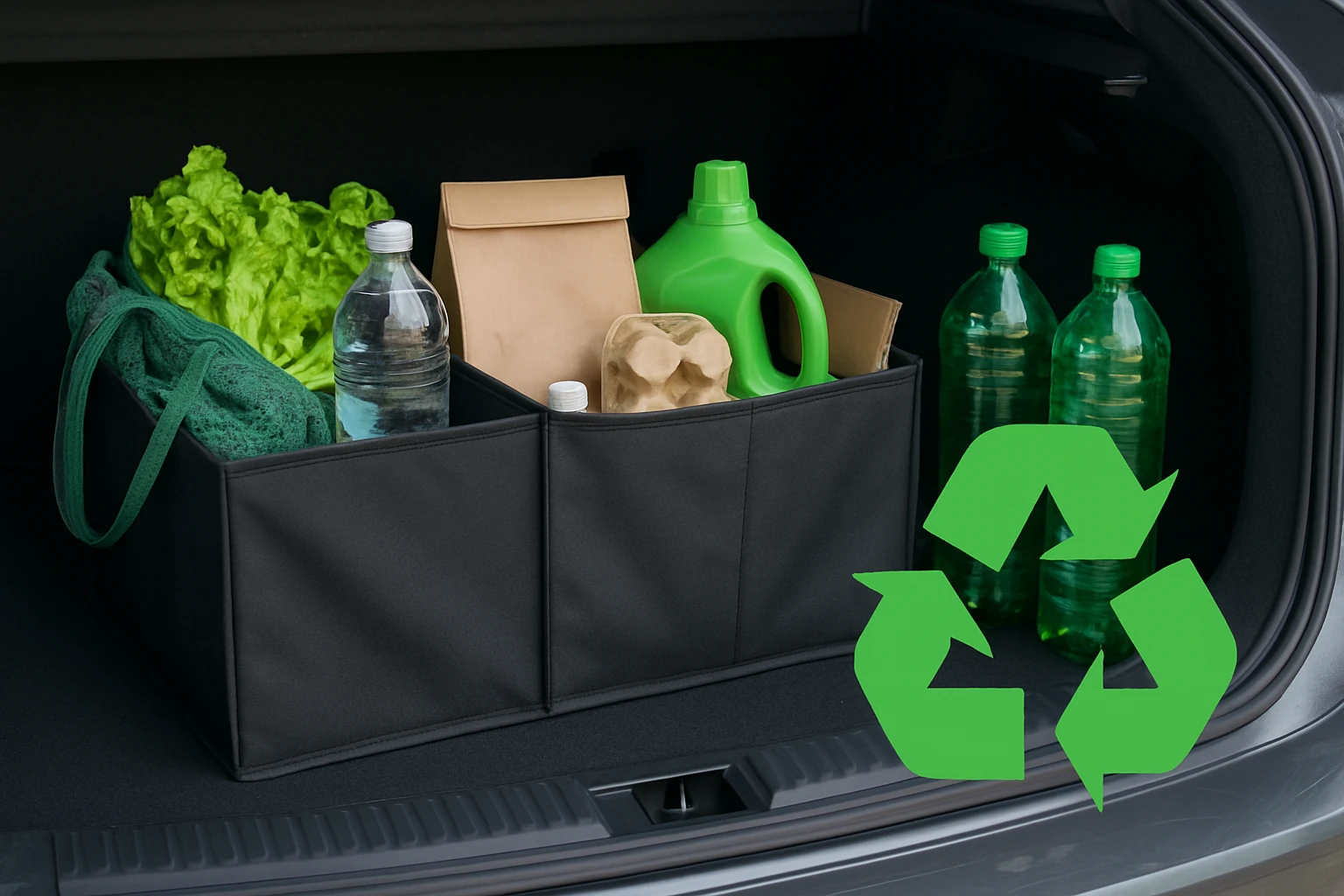
Trunk organizers have become essential accessories for modern drivers who value order and efficiency. This guide examines the materials used in popular organizers, evaluates their environmental impact, and presents eco‑friendly alternatives. Readers will learn how to assess product sustainability, compare key features, and apply best practices for reuse and recycling. By the end of the article, one will be equipped to choose a responsible organizer without compromising functionality.
Background and Context
Most trunk organizers are constructed from synthetic fabrics such as Oxford cloth, polyester, and nylon, often reinforced with polyethylene (PE) or polypropylene (PP) components. These polymers provide durability, water resistance, and lightweight characteristics, but they are derived from fossil fuels and can persist in landfills for centuries. Understanding terms such as "600D" (denoting denier, a measure of fabric thickness) and "PEVA" (polyethylene vinyl acetate, a leak‑proof liner) helps consumers evaluate durability versus ecological cost. In addition, many organizers incorporate Velcro, metal buckles, and plastic handles, each contributing to the overall material footprint.
Regulatory bodies and industry groups are increasingly encouraging manufacturers to adopt recycled fibers, biodegradable coatings, and modular designs that extend product life. Consumers can influence the market by demanding transparency in material sourcing and supporting brands that provide end‑of‑life recycling programs. The following sections break down material categories, highlight sustainable choices, and recommend specific products that embody responsible design.
Material Categories and Environmental Considerations
Three primary material groups dominate the trunk organizer market: traditional synthetic fabrics, recycled composites, and hybrid designs that blend natural fibers with synthetics. Each category presents distinct trade‑offs in terms of durability, water resistance, and carbon footprint.
- Traditional Synthetic Fabrics: 600D Oxford cloth and 600D polyester are common due to their abrasion resistance and low cost. Production emits significant greenhouse gases, and the fabrics are not readily biodegradable.
- Recycled Composites: Some manufacturers incorporate post‑consumer PET bottles into the weave, reducing virgin plastic use. These fabrics retain strength while lowering overall environmental impact.
- Hybrid Natural‑Synthetic Blends: Adding hemp, jute, or organic cotton improves biodegradability but may compromise water resistance unless treated with eco‑friendly coatings.
When evaluating an organizer, one should consider the entire lifecycle: raw material extraction, manufacturing energy, transportation, usage longevity, and end‑of‑life disposal. Products that offer modular components, such as removable dividers, often extend usable life because users can replace only the worn parts.
Product Recommendations Aligned with Sustainability
The following products illustrate how material choices influence performance and ecological impact. Each recommendation includes key specifications, user ratings, and a brief analysis of sustainability attributes.
1. Femuar Large Trunk Organizer
This organizer offers a 72 L capacity, constructed from heavy‑duty 600D Oxford cloth that is waterproof and wear‑resistant. The material provides excellent durability for heavy loads such as groceries, sports equipment, and pet accessories. At a price of $21.24 and a rating of 4.7/5 from 5,004 reviews, it delivers high value. Sustainability notes: the fabric is not recycled, but the product’s collapsible design reduces the need for multiple storage solutions, potentially lowering overall material consumption.
2. HOTOR Foldable Trunk Organizer
Featuring two large compartments and six mesh pockets, this organizer uses sturdy Oxford cloth with reinforced stitching. It supports over 60 lb and includes adjustable Velcro strips for flexible configuration. Priced at $12.99 with a 4.6/5 rating from 8,259 reviews, it is an affordable option. Sustainability notes: the design emphasizes a flat‑foldable profile, encouraging reuse and reducing the need for additional storage accessories.
3. GDNasist Trunk Organizer with Cooler Bag
This premium model incorporates a removable leak‑proof cooler bag, 600D waterproof Oxford polyester, and a 2.5 mm PE internal plate for rigidity. The cooler compartment holds up to 35 L, equivalent to 40 cans of soda. With a price of $52.99 and a 4.6/5 rating from 882 reviews, it targets users who need temperature‑controlled storage. Sustainability notes: the removable cooler can be washed separately, extending product life, and the use of PEVA liner reduces reliance on PVC, a more hazardous plastic.
4. HOTOR Trunk Organizer with Leakproof Cooler
Offering 69 L of storage, this organizer blends a built‑in cooler with high‑quality Oxford cloth and reinforced stitching. The cooler utilizes a leak‑proof PEVA lining and pearl‑cotton padding for thermal insulation. It costs $19.98 and holds a 4.7/5 rating from 748 reviews. Sustainability notes: the integrated cooler reduces the need for a separate cooler bag, thereby decreasing overall material usage.
Comparison and Selection Guide
Choosing the right trunk organizer requires balancing capacity, durability, price, and environmental considerations. The table below summarizes the four featured products across key criteria.
| Product | Capacity | Material | Cooler | Price | Rating | Eco Highlights |
|---|---|---|---|---|---|---|
| Femuar Large Trunk Organizer | 72 L | 600D Oxford cloth (non‑recycled) | None | $21.24 | 4.7 | Collapsible design reduces extra storage items |
| HOTOR Foldable Trunk Organizer | Not specified (approx. 45 L) | Oxford cloth with reinforced stitching | None | $12.99 | 4.6 | Flat‑foldable, low‑cost entry point |
| GDNasist Trunk Organizer with Cooler Bag | 35 L cooler + main compartment | 600D waterproof Oxford polyester | Removable PEVA cooler (35 L) | $52.99 | 4.6 | Separate cooler extends lifespan, PEVA liner avoids PVC |
| HOTOR Trunk Organizer with Leakproof Cooler | 69 L total | Oxford cloth, reinforced stitching | Integrated PEVA cooler | $19.98 | 4.7 | Integrated cooler reduces duplicate products |
For drivers who prioritize maximum capacity and a built‑in cooler, the HOTOR Trunk Organizer with Leakproof Cooler offers the best value. Users seeking a budget‑friendly, lightweight option may prefer the HOTOR Foldable Trunk Organizer. Those who require a removable cooler for occasional picnics can consider the GDNasist Trunk Organizer with Cooler Bag. Finally, the Femuar Large Trunk Organizer delivers the highest volume for families transporting bulky items.
Best Practices and Tips for Sustainable Use
Even the most eco‑friendly organizer can generate waste if misused. Follow these guidelines to maximize lifespan and minimize environmental impact.
- Regular Cleaning: Use a damp cloth and mild detergent to clean waterproof fabrics. Avoid harsh chemicals that can degrade polymer fibers.
- Modular Maintenance: Replace only damaged dividers or Velcro strips instead of discarding the entire unit. Many manufacturers sell replacement parts.
- Weight Distribution: Do not exceed the manufacturer’s load rating; overloading can cause tears that lead to premature disposal.
- End‑of‑Life Recycling: Locate local textile recycling programs that accept synthetic fabrics. Some retailers offer take‑back schemes for used organizers.
- Upgrade Strategically: When a cooler component wears out, consider swapping in a third‑party PEVA cooler bag rather than replacing the whole organizer.
Implementing these practices reduces landfill contribution and extends product utility, aligning daily driving habits with broader sustainability goals.
Frequently Asked Questions
- What does "600D" mean and why does it matter?
- "600D" refers to the denier count, a measurement of yarn thickness; higher denier indicates greater durability and resistance to punctures, which is essential for heavy‑load trunk organization.
- Are Oxford cloth organizers recyclable?
- Most Oxford cloth is made from polyester, which can be recycled in specialized textile programs, but it is not accepted in standard municipal recycling streams.
- How can I verify if a product uses recycled materials?
- Look for certifications such as "Made with Recycled PET" on the product listing or contact the manufacturer for a material breakdown.
- Do leak‑proof coolers use harmful plastics?
- PEVA liners, as used in the featured cooler models, are free of chlorine and considered safer than PVC, though they remain petroleum‑based.
- Can I donate a used organizer instead of recycling?
- Yes, many community centers, schools, and charitable organizations accept gently used organizers for reuse, which further reduces waste.
Conclusion
Understanding the materials behind trunk organizers empowers consumers to make choices that balance durability, functionality, and ecological responsibility. By evaluating polymer types, recycled content, and product design, one can select an organizer that meets specific storage needs while minimizing environmental impact. The recommended products illustrate a range of sustainable features, from integrated coolers to modular components that extend lifespan. Applying the best‑practice tips and recycling strategies outlined in this guide will ensure that each purchase contributes positively to a greener future.
Products Featured in This Guide
Femuar Large Trunk Organizer
Price: $21.24 | Rating: 4.7/5 (5,004 reviews)
Featured for its 72 L capacity, waterproof 600D Oxford cloth, and collapsible design that reduces the need for multiple storage solutions.
HOTOR Foldable Trunk Organizer
Price: $12.99 | Rating: 4.6/5 (8,259 reviews)
Featured for its budget‑friendly price, sturdy Oxford cloth, 60 lb load capacity, and flat‑foldable profile that encourages reuse.
GDNasist Trunk Organizer with Cooler Bag
Price: $52.99 | Rating: 4.6/5 (882 reviews)
Featured for its removable leak‑proof cooler, 600D waterproof polyester, and customizable interior partitions that adapt to diverse cargo.
HOTOR Trunk Organizer with Leakproof Cooler
Price: $19.98 | Rating: 4.7/5 (748 reviews)
Featured for its integrated PEVA cooler, 69 L total capacity, and adjustable Velcro strips that allow multiple size configurations.