The Fleet Manager's Guide to ROI on Modular Trunk Organizers: How to Calculate Savings, Boost Efficiency, and Cut Costs
Introduction
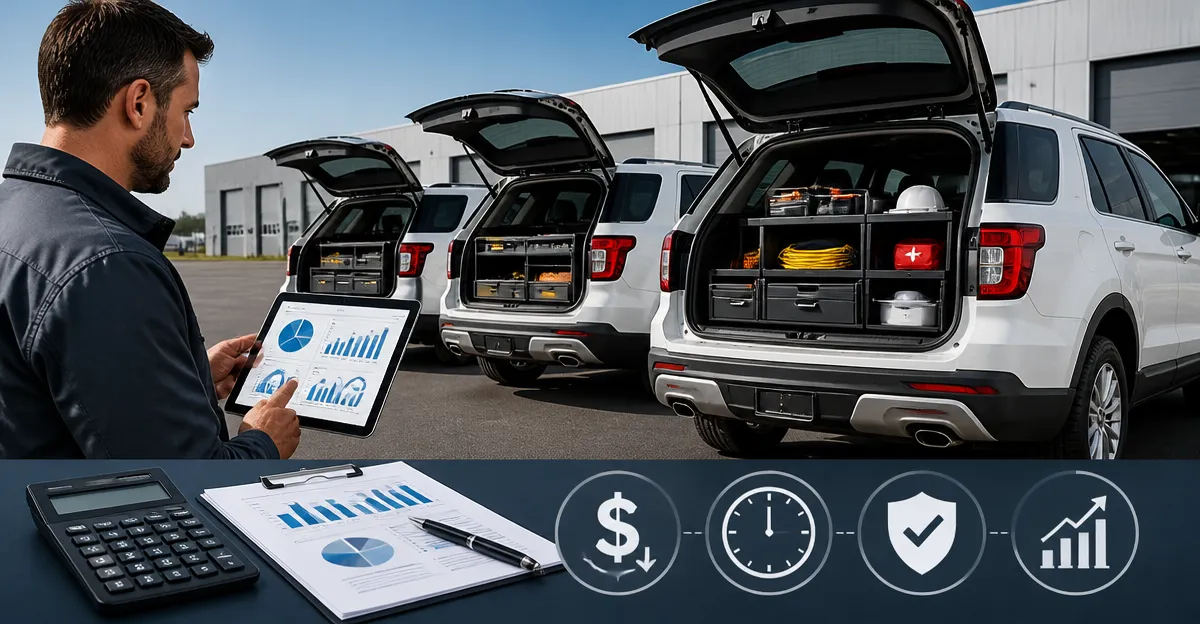
Fleet managers constantly seek ways to reduce operating expenses while maintaining high service standards. One often overlooked area is the organization of cargo space within vehicles. This guide explains how modular trunk organizers can generate measurable return on investment (ROI) by preventing damage, streamlining loading, and extending vehicle lifespan. Readers will learn how to calculate savings, select the appropriate organizer, and implement best‑practice procedures that translate into real‑world cost reductions.
The article combines theoretical frameworks with concrete product examples. Each product recommendation is anchored to real Amazon data, including price, rating, and key specifications. By the end of the guide, fleet managers will possess a clear methodology for evaluating organizer performance and a toolbox of vetted solutions.
Background and Context
Vehicle cargo disarray creates hidden costs that accumulate quickly. Loose items can shift during transit, leading to wear on interior fabrics, damage to equipment, and increased injury risk for drivers. In addition, inefficient loading times reduce the number of trips a fleet can complete each day, directly affecting revenue.
Modular trunk organizers address these challenges by providing defined compartments, non‑slip bases, and reinforced handles for safe transport. Modern organizers are constructed from high‑denier Oxford polyester, which offers abrasion resistance and water resistance. Many models feature collapsible designs, allowing them to be stored when not in use, thereby preserving valuable trunk space.
Understanding the financial impact of these benefits requires a systematic approach. The following sections outline the key concepts, calculation methods, and product selections that enable fleet managers to quantify ROI.
Key Concepts for Calculating ROI
ROI on trunk organizers can be expressed as a ratio of total cost savings to the initial investment. Savings arise from three primary sources: reduced vehicle interior wear, decreased loading/unloading time, and lower incidence of cargo‑related claims.
1. Vehicle Interior Wear – Organized cargo reduces friction against seat backs, floor mats, and trim. By extending the service interval for interior cleaning and upholstery repair, a fleet can save labor and material costs. Estimate annual wear cost per vehicle and multiply by the number of vehicles using organizers.
2. Loading Efficiency – Defined compartments enable drivers to locate tools and parts quickly. Studies show that organized loading can cut handling time by 15‑20 %. Calculate the average minutes saved per trip, multiply by driver hourly wage, and factor in the number of trips per month.
3. Claims Reduction – Shifting cargo is a frequent cause of damage claims. A well‑secured organizer reduces claim frequency. Track historical claim costs and apply an estimated reduction percentage based on organizer usage.
These variables feed into the ROI formula: ROI = (Total Annual Savings – Organizer Cost) / Organizer Cost × 100 %. A positive percentage indicates a profitable investment.
Strategic Implementation of Modular Organizers
Effective deployment requires alignment with fleet operations. Begin by auditing the most common cargo types and the dimensions of the vehicles in the fleet. Match organizer capacity to the typical load profile to avoid over‑ or under‑sizing.
Next, standardize a training program that teaches drivers how to secure the organizer, distribute weight evenly, and perform quick clean‑up. Consistent usage ensures that the theoretical savings materialize in practice.
Finally, monitor key performance indicators (KPIs) such as loading time per trip, interior maintenance expenses, and claim frequency. Use these metrics to adjust organizer placement or select alternative models if necessary.
Product Recommendations for Fleet Applications
Below are four highly rated organizers that align with the concepts described above. Each product includes price, rating, and feature highlights drawn from verified Amazon listings.
1. K KNODEL Small Foldable Trunk Organizer
The K KNODEL Small Foldable Trunk Organizer offers a compact footprint of 19.7" × 12.2" × 10.2" while providing two divided sections, a large mesh pocket, and four smaller mesh pockets. Constructed from 600D Oxford polyester with reinforced handles, it can support heavy items without slipping. Its non‑slip bottom and foldable design make it suitable for both vehicle trunks and household storage. At $12.99 and a 4.7‑star rating from 3,890 reviews, it delivers high value for fleets seeking a lightweight, durable solution.
2. GDNasist Large Trunk Organizer with Cooler & Lid
The GDNasist Large Trunk Organizer with Cooler & Lid combines cargo organization with a removable 35 L insulated cooler capable of holding up to 40 beverage cans. Six removable partitions allow custom space configuration, and adjustable straps secure the unit to the trunk floor. Constructed from 600D Oxford polyester with a 2.5 mm PE inner plate, it resists deformation and is easy to clean. Priced at $47.69 with a 4.6‑star rating from 1,047 reviews, it is ideal for fleets that require temperature‑controlled transport of refreshments or temperature‑sensitive parts.
3. Tidify Front Seat Organizer with Tablet Pocket
The Tidify Front Seat Organizer mounts on the front seat headrest and provides two deep cushioned compartments, two bottle holders, and a dedicated tablet pocket. Adjustable side straps keep the organizer stable during vehicle motion, and a padded headrest sleeve distributes load for comfort. Made from dense 600D polyester with X‑shaped stitching, it endures heavy use. At $38.90 and a 4.7‑star rating from 6,111 reviews, it is suited for service‑oriented fleets where technicians need tools and documentation within arm’s reach.
4. Sposuit 70L Collapsible Trunk Organizer
The Sposuit 70L Collapsible Trunk Organizer provides a large 70‑liter capacity with 11 pockets, including eight side cloth pockets and three mesh pockets. Velcro straps secure the unit, and the 600D Oxford polyester construction offers abrasion resistance. Its foldable design allows storage in the trunk or rear seats when not needed. Priced at $22.99 with a 4.8‑star rating from 3,792 reviews, it offers a balance of capacity and affordability for medium‑size delivery vehicles.
Comparison and Selection Guide
| Feature | K KNODEL Small | GDNasist Large + Cooler | Tidify Front Seat | Sposuit 70L |
|---|---|---|---|---|
| Dimensions (L×W×H) | 19.7"×12.2"×10.2" | Customizable layers | Fits front seat headrest | 23.6"×14.6"×12.2" |
| Material | 600D Oxford polyester | 600D Oxford polyester + 2.5 mm PE plate | 600D polyester | 600D Oxford polyester |
| Price (USD) | 12.99 | 47.69 | 38.90 | 22.99 |
| Rating | 4.7 (3,890 reviews) | 4.6 (1,047 reviews) | 4.7 (6,111 reviews) | 4.8 (3,792 reviews) |
| Key Advantage | Compact, foldable, reinforced handles | Customizable compartments and built‑in cooler | Front‑seat accessibility for tools and tablets | High capacity with multiple pockets |
When selecting an organizer, fleet managers should prioritize the cargo profile, vehicle size, and required accessories. For small service vans that transport tools, the K KNODEL model provides a low‑cost, durable solution. Fleets that deliver temperature‑sensitive items benefit from the GDNasist cooler integration. Technicians who need immediate access to paperwork and devices find the Tidify front‑seat organizer invaluable. Large delivery trucks requiring extensive compartmentalization should consider the Sposuit 70L unit.
Best Practices & Tips for Maximizing ROI
- Conduct a pre‑implementation audit to identify high‑frequency cargo items and their dimensions.
- Standardize organizer placement across the fleet to simplify driver training and maintenance.
- Use weight‑distribution guidelines: place heavier items low and centered to maintain vehicle stability.
- Schedule quarterly inspections of organizer straps, Velcro, and non‑slip bases to ensure continued performance.
- Integrate organizer usage into the vehicle inspection checklist, documenting any wear or damage.
- Leverage the foldable nature of organizers to free trunk space for occasional oversized loads.
- Track KPI trends before and after implementation to quantify time saved and cost reductions.
Frequently Asked Questions
- How do I calculate the exact monetary savings from reduced interior wear? Estimate the annual cost of upholstery cleaning and repairs per vehicle, then apply a reduction factor based on observed decrease in wear after organizer installation.
- Can organizers be used in both passenger cars and larger trucks? Yes, most modular organizers are designed with adjustable straps and collapsible frames that accommodate a wide range of vehicle sizes.
- Is the cooler compartment in the GDNasist organizer truly leak‑proof? The cooler bag is described as leak‑resistant and insulated; however, users should test for leaks with water before transporting valuable items.
- How often should the non‑slip bottom be inspected? Inspect the bottom surface during each scheduled vehicle service; replace or clean the material if the grip diminishes.
- Do these organizers affect vehicle fuel efficiency? Properly secured cargo reduces aerodynamic drag caused by shifting items, which can marginally improve fuel efficiency.
- Are the organizers covered by warranty? Most manufacturers provide a limited warranty; consult the seller’s product page for specific terms.
- Can I customize the organizer layout for seasonal needs? Units with removable partitions, such as the GDNasist model, allow reconfiguration to suit seasonal inventory changes.
Conclusion
Modular trunk organizers represent a strategic investment for fleet managers seeking measurable cost reductions. By quantifying savings from reduced interior wear, faster loading, and fewer claims, managers can demonstrate a clear ROI that often exceeds the modest purchase price. Selecting the appropriate organizer—whether the compact K KNODEL, the versatile GDNasist with cooler, the driver‑focused Tidify, or the high‑capacity Sposuit—ensures that each vehicle operates at peak efficiency. Implementing standardized training, regular inspections, and KPI monitoring solidifies the financial benefits over the long term.
Adopting these practices empowers fleets to deliver goods and services more reliably while preserving vehicle value and protecting driver safety.
Products Featured in This Guide
K KNODEL Small Foldable Trunk Organizer
Price: $12.99 | Rating: 4.7/5 (3,890 reviews)
Featured for its compact dimensions, reinforced handles, and affordable price, making it ideal for small service vehicles.
GDNasist Large Trunk Organizer with Cooler & Lid
Price: $47.69 | Rating: 4.6/5 (1,047 reviews)
Featured for its customizable partitions and built‑in insulated cooler, suitable for fleets transporting perishable goods.
Tidify Front Seat Organizer
Price: $38.90 | Rating: 4.7/5 (6,111 reviews)
Featured for its front‑seat mounting system, tablet pocket, and robust construction, ideal for technicians needing immediate tool access.
Sposuit 70L Collapsible Trunk Organizer
Price: $22.99 | Rating: 4.8/5 (3,792 reviews)
Featured for its high capacity, multiple pockets, and collapsible design, making it suitable for medium‑size delivery trucks.