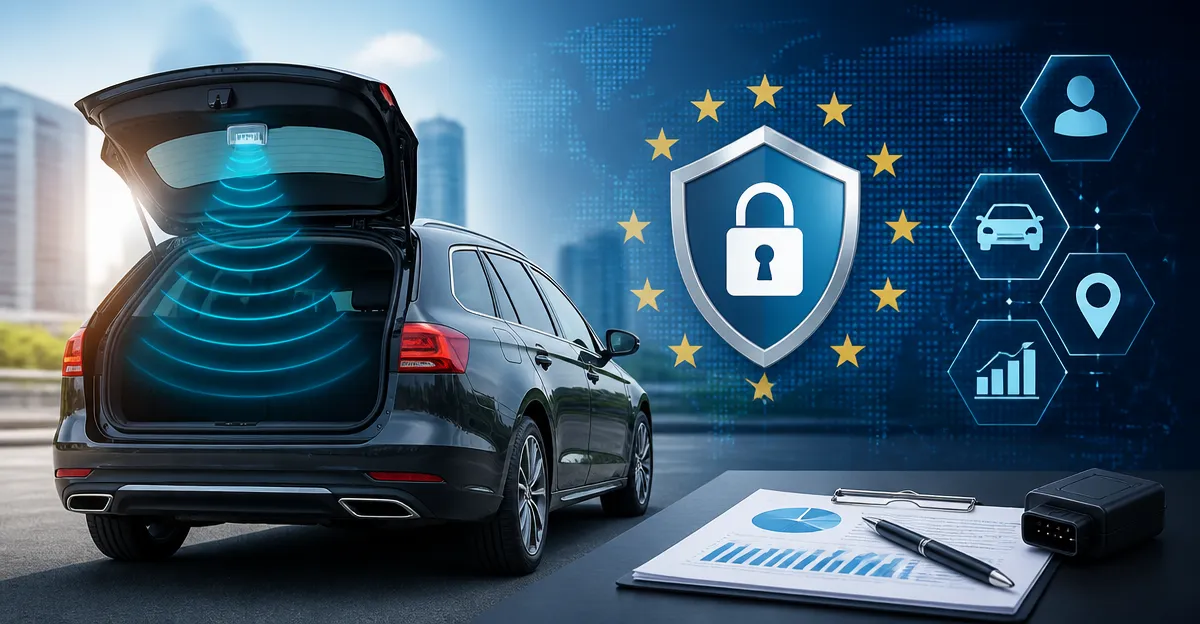
Telematics Privacy Risks: The Complete GDPR Guide to Trunk Sensors, Data Protection and Compliance
Introduction
Modern vehicles and marine vessels generate a continuous stream of sensor data that can improve safety, efficiency, and user experience. However, the same data can expose owners to privacy violations if it is collected, stored, or shared without appropriate safeguards. This guide explains the scope of telematics privacy under the General Data Protection Regulation (GDPR), outlines the most common risks associated with trunk and other vehicle sensors, and provides actionable recommendations for choosing compliant solutions. Readers will learn how to assess risk, evaluate products, and implement best practices that protect personal data while retaining the benefits of advanced telemetry.
Background and Context
GDPR defines personal data as any information relating to an identified or identifiable natural person. Location data, engine status, and even battery health become personal data when they can be linked to a specific individual. Telematics systems combine GPS, accelerometer, fuel‑level, and diagnostic sensors to create detailed movement profiles. When these profiles are processed without a lawful basis, they constitute a breach of GDPR principles such as lawfulness, fairness, and data minimisation.
Regulators across the European Economic Area have issued guidance stating that vehicle‑based tracking devices must obtain explicit consent, provide transparent information, and allow data subjects to exercise their rights. Failure to comply can result in fines up to €20 million or 4 % of annual global turnover. Consequently, businesses and private owners must treat telematics hardware as a privacy‑critical component rather than a mere convenience accessory.
Understanding Key Telematics Privacy Risks
Three primary risk categories dominate the telematics landscape. First, unauthorised data collection occurs when sensors transmit information to third‑party servers without clear user consent. Second, insecure data transmission exposes data to interception or tampering, especially when devices rely on legacy cellular protocols. Third, excessive data retention creates a repository of historic location traces that can be misused for profiling or surveillance.
For marine owners, a device such as the LocMarine Boat Monitoring Hub aggregates bilge water levels, shore‑power status, GPS coordinates, and entry alerts. While the hub offers valuable safety insights, each data point is personally identifying when linked to the vessel’s registration and owner details. The same principle applies to automotive trackers like the CARLOCK Wired GPS Tracker, which continuously streams location, engine start events, and driver‑behaviour metrics.
Regulators consider the combination of location and behavioural data as high‑risk because it can reveal daily routines, home addresses, and even personal relationships. Therefore, any telematics solution must embed privacy‑by‑design controls, such as end‑to‑end encryption, granular consent management, and configurable data‑retention policies.
Selecting GDPR‑Compliant Telematics Solutions
When evaluating a telematics device, privacy‑savvy buyers should verify that the manufacturer provides clear documentation on data handling, offers opt‑in mechanisms, and hosts data within EU‑compliant cloud environments. The following products exemplify different approaches to compliance while delivering functional value.
- LocMarine Boat Monitoring Hub – This hub includes 4G/5G LTE connectivity, a rugged US‑made chassis, and a six‑month complimentary monitoring service. Its mobile application allows owners to disable specific alerts, thereby limiting unnecessary data transmission. The device holds a 4.8‑star rating from nine verified reviews, indicating strong user satisfaction.
- Spektrum Flight Pack Voltage Sensor – Designed for hobby‑grade aircraft, this sensor monitors battery voltage and transmits telemetry via a compatible Spektrum transmitter. Although primarily a performance tool, the sensor does not store location data, reducing privacy exposure. It carries a 4.5‑star rating from 26 reviews and is priced at $14.99.
- Mopar Telematics Module – Integrated into select vehicle models, this module enables remote diagnostics and over‑the‑air updates. Mopar states that data is processed in accordance with GM’s privacy policy, which aligns with GDPR requirements. The module is priced at $325.00.
- CARLOCK Wired GPS Tracker – Offering real‑time tracking, driver‑behaviour alerts, and battery health monitoring, CarLock provides an optional data‑deletion request feature within its app. The device is rated 4.3 stars by 131 reviewers and costs $59.95. Its multi‑network SIM architecture ensures reliable coverage across EU territories.
- Spektrum Flight Pack Voltage Sensor (20‑inch) – This larger variant supports electric‑powered aircraft and requires a TM1000 telemetry‑capable transmitter. It is priced at $12.99 and holds a 4‑star rating from 29 reviews. Because it focuses solely on voltage, it presents minimal privacy concerns.
Each of these solutions can be incorporated into a broader compliance strategy, provided that the user configures privacy settings appropriately and retains control over data export and deletion.
Comparison and Selection Guide
| Feature | LocMarine Hub | CARLOCK Tracker | Mopar Module | Spektrum Sensor (2‑pin) | Spektrum Sensor (20‑inch) |
|---|---|---|---|---|---|
| Primary Use Case | Marine vessel monitoring | Automotive real‑time tracking | OEM vehicle diagnostics | RC aircraft voltage telemetry | RC aircraft voltage telemetry (larger sensor) |
| Connectivity | 4G/5G LTE | 4G LTE, multi‑network SIM | Cellular (OEM integration) | Telemetry via Spektrum transmitter | Telemetry via Spektrum transmitter |
| GDPR Features | App‑based consent, data‑export option | In‑app data‑deletion request, encrypted transmission | OEM privacy policy aligned with GDPR | No personal data collected | No personal data collected |
| Price (USD) | 578.00 | 59.95 | 325.00 | 14.99 | 12.99 |
| Average Rating | 4.8/5 (9 reviews) | 4.3/5 (131 reviews) | Not listed | 4.5/5 (26 reviews) | 4/5 (29 reviews) |
Potential buyers should match the device’s primary function with their compliance needs. For example, a yacht owner prioritising location privacy may prefer the LocMarine Hub because its app permits selective alert disabling. Conversely, a small fleet manager seeking driver‑behaviour analytics might select the CARLOCK Tracker while leveraging its data‑deletion request to satisfy GDPR obligations.
Best Practices & Tips for Data Protection
- Perform a Data Protection Impact Assessment (DPIA) before deploying any telematics hardware. Identify the categories of personal data processed and assess the necessity of each data point.
- Configure devices to transmit data over encrypted channels (TLS 1.2 or higher). Verify that the manufacturer uses end‑to‑end encryption for both uplink and storage.
- Implement strict access controls within the companion app. Use strong, unique passwords and enable two‑factor authentication where available.
- Document the lawful basis for processing. Consent is often the most transparent basis for consumer‑focused trackers, but legitimate interest may apply for fleet optimisation.
- Set clear data‑retention periods. Delete raw location logs after the minimum period required for the intended purpose, typically 30 days for operational monitoring.
- Provide data subjects with a straightforward mechanism to request access, correction, or erasure of their telemetry data. Many modern apps include a “privacy centre” that automates these requests.
- Regularly audit firmware updates. Ensure that updates do not introduce new data‑collection features without explicit user consent.
Frequently Asked Questions
1. Does GDPR apply to telematics data collected outside the EU?
Yes. GDPR applies to any personal data of EU residents, regardless of where the data processor is located. Companies offering telematics services to EU customers must comply even if the hardware is manufactured abroad.
2. How can I verify that a telematics device stores data in an EU‑hosted server?
Review the provider’s privacy policy for statements about data‑center locations. Request a data‑processing agreement that specifies EU‑based storage or appropriate Standard Contractual Clauses.
3. Is consent required for fleet‑wide tracking of employee‑owned vehicles?
When the employer processes location data of employees, explicit consent is generally required unless a legitimate interest assessment demonstrates that tracking is necessary for the performance of a contract and does not override employee rights.
4. Can I disable specific sensors to reduce privacy exposure?
Many modern devices, such as the LocMarine Hub and CARLOCK Tracker, allow users to toggle individual alerts or data streams via their mobile applications, thereby limiting the scope of personal data collected.
5. What are the penalties for non‑compliance?
Regulatory fines can reach €20 million or 4 % of global annual turnover, whichever is higher. Additionally, non‑compliant organisations may face reputational damage and mandatory remedial actions.
Conclusion
Telematics offers powerful insights for marine and automotive owners, yet it introduces significant privacy challenges under GDPR. By understanding the legal framework, assessing risk, and selecting devices that embed privacy‑by‑design features, users can reap the benefits of real‑time monitoring while safeguarding personal data. The products highlighted in this guide exemplify a range of compliance‑focused options, from rugged marine hubs to affordable automotive trackers. Implementing the best‑practice checklist will further ensure that data processing remains lawful, transparent, and proportionate.
Products Featured in This Guide
LocMarine Boat Monitoring Hub
Price: $578.00 | Rating: 4.8/5 (9 reviews)
Featured because it provides comprehensive marine telemetry with GDPR‑friendly consent controls and a six‑month free monitoring service.
Spektrum Flight Pack Voltage Sensor
Price: $14.99 | Rating: 4.5/5 (26 reviews)
Featured for its low‑risk telemetry function that does not collect location data, illustrating a privacy‑minimal solution for hobby aircraft.
Mopar Telematics Module
Price: $325.00
Featured because it integrates with OEM vehicle systems and adheres to manufacturer privacy policies that align with GDPR requirements.
CARLOCK Wired GPS Tracker
Price: $59.95 | Rating: 4.3/5 (131 reviews)
Featured for its real‑time vehicle tracking, driver‑behaviour alerts, and built‑in data‑deletion request feature that support GDPR compliance.
Spektrum Flight Pack Voltage Sensor (20‑inch)
Price: $12.99 | Rating: 4/5 (29 reviews)
Featured because it offers a larger form‑factor for electric aircraft telemetry while maintaining a minimal privacy footprint.