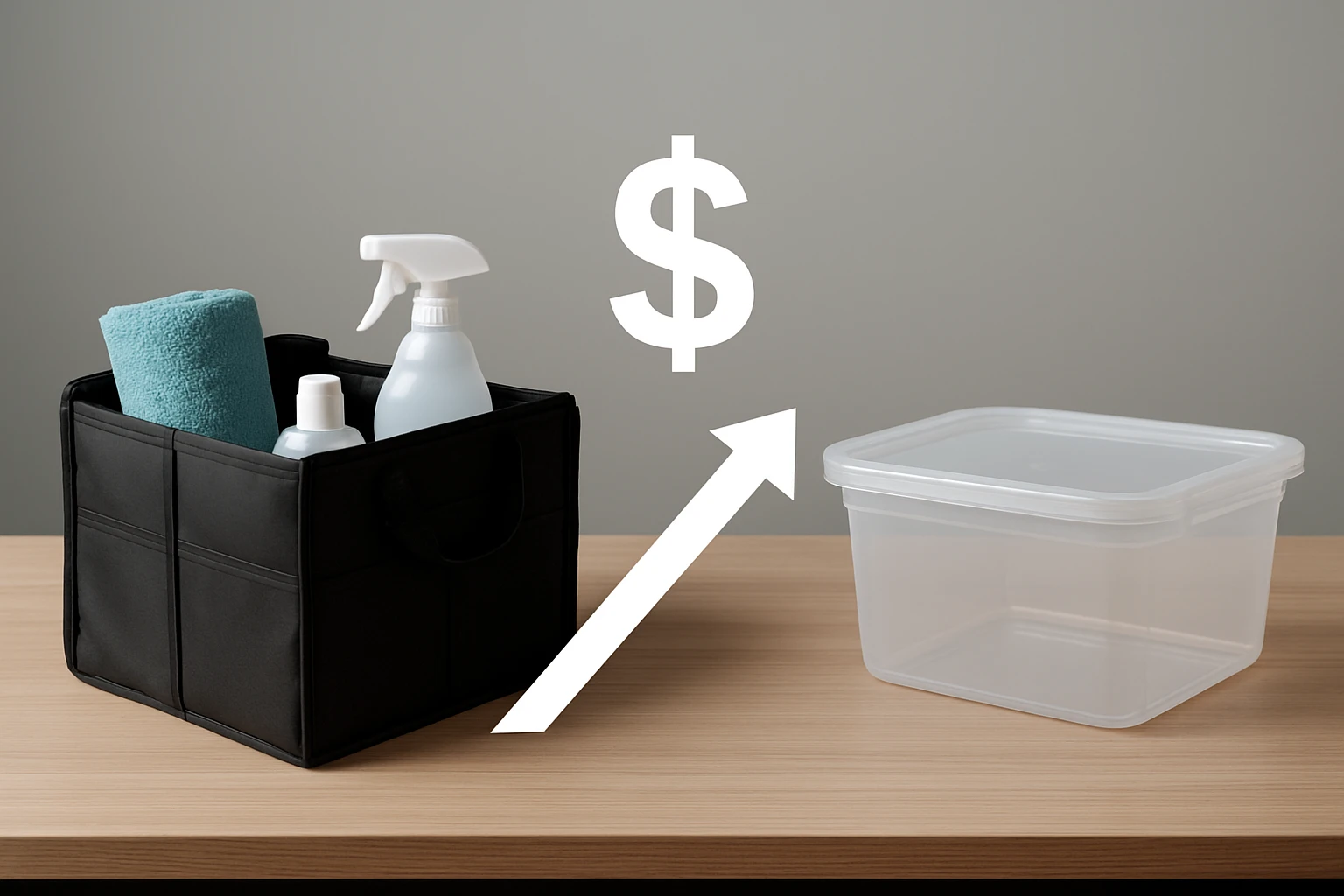
Lifecycle Cost of Modular Trunk Organizers vs Single‑Use Storage: Ultimate Buyer's Guide to Savings, Durability & Sustainability
Introduction
The modern driver often faces the challenge of keeping a vehicle interior tidy while transporting groceries, tools, and recreational gear. This guide explains how the lifecycle cost of modular trunk organizers differs from that of single‑use storage solutions. Readers will learn to evaluate purchase price, depreciation, maintenance, and environmental impact. By the end of the article, one will be able to select a storage system that maximizes savings, durability, and sustainability.
Background and Context
Trunk organization has evolved from simple plastic bins to sophisticated modular systems that can be reconfigured for different cargo loads. Single‑use storage typically refers to disposable or low‑durability containers that are replaced frequently. Understanding the total cost of ownership requires examining material quality, load capacity, and the frequency of replacement. Moreover, environmental considerations such as material recyclability and carbon footprint have become decisive factors for many consumers.
Understanding Modular vs Single‑Use Trunk Storage
Modular organizers consist of interchangeable compartments, reinforced handles, and non‑slip bases. They are designed to adapt to varying vehicle sizes and cargo types. Single‑use storage, by contrast, often lacks structural reinforcement and is intended for short‑term use. The modular approach spreads the initial investment across many uses, reducing the per‑use cost over time.
Key attributes of modular systems include expandable compartments, durable fabrics such as 600D or 1680D Oxford, and secure fastening mechanisms. These features contribute to a higher upfront price but lower long‑term expenses because the product endures repeated loading cycles without degradation.
Cost Components Over the Lifecycle
The purchase price is only the first element of total cost. Subsequent components include maintenance (cleaning, occasional strap replacement), depreciation (loss of resale value), and disposal or recycling fees. A high‑quality modular organizer can retain resale value, especially when it remains in good condition.
For example, the AOPHY 95L Car Trunk Organizer costs $28.99 and carries a 4.8‑star rating from 2,811 reviews. Its 600D Oxford cloth and non‑slip bottom strips provide durability that can extend beyond five years of regular use. By contrast, a disposable plastic bin purchased for $5 may need replacement each year, resulting in a five‑year cost of $25 plus waste disposal.
Durability and Sustainability Factors
Material thickness, stitching quality, and reinforcement determine how well an organizer resists tearing and abrasion. The EAROND Collapsible Trunk Organizer uses 1680D Oxford polyester and a heavy‑duty reinforcing plate, offering superior load‑bearing capacity. Its collapsible lid reduces storage space when not in use, decreasing the need for additional storage containers.
Sustainability also hinges on the ability to repurpose the organizer. The K KNODEL Foldable Trunk Organizer is lightweight, folds flat, and can serve as a household storage basket after vehicle use. This dual‑purpose functionality reduces overall material consumption.
Product Recommendations
When selecting a modular organizer, consider vehicle size, typical cargo volume, and frequency of travel. The following products exemplify distinct strengths:
- AOPHY 95L Car Trunk Organizer – Ideal for large SUVs and trucks. Its three adjustable compartments and six mesh pockets provide a total capacity of 95 L. The non‑slip magic strips and two adjustable straps secure the unit during motion.
- EAROND Collapsible Trunk Organizer – Best for drivers who need a portable solution. The removable lid and fold‑away design allow storage in a cabin or drawer, while the 1680D fabric resists heavy loads.
- K KNODEL Foldable Trunk Organizer – Perfect for budget‑conscious shoppers seeking a compact, versatile organizer. At $13.99, it offers a sturdy 600D polyester construction, reinforced handles, and a non‑slip bottom.
Comparison and Selection Guide
To aid decision‑making, evaluate each organizer against the following criteria:
| Criterion | AOPHY 95L | EAROND Collapsible | K KNODEL Foldable |
|---|---|---|---|
| Price | $28.99 | $49.99 | $13.99 |
| Capacity | 95 L | ~70 L (estimated) | ~45 L (estimated) |
| Material | 600D Oxford | 1680D Oxford polyester | 600D Oxford polyester |
| Adjustability | 3 compartments, removable dividers | Collapsible lid, side velcro | Two sections, foldable |
| Rating | 4.8/5 (2,811 reviews) | 4.6/5 (1,429 reviews) | 4.7/5 (3,395 reviews) |
| Best Use Case | Large families, frequent grocery runs | Travelers, campers, multi‑vehicle households | Urban commuters, occasional use |
Buyers should match the organizer to their most common cargo scenario. High‑capacity needs favor the AOPHY model, whereas space‑saving travel benefits from the EAROND design. For occasional use with a limited budget, the K KNODEL option provides adequate performance.
Best Practices & Tips
Maintain the organizer by wiping the surface with a damp cloth after each use. Reinforce the non‑slip strips with additional Velcro if they lose adhesion over time. When transporting heavy items, distribute weight evenly across compartments to prevent deformation.
Store the organizer in a dry environment when not in use to avoid mildew. For modular units, consider labeling each compartment with removable tags to streamline item retrieval. Periodically inspect stitching and handles; replace worn straps before they fail.
To maximize sustainability, donate a still‑usable organizer to a local charity or repurpose it as a garage tool bin. Recycling programs for polyester fabrics are expanding, so check local facilities for proper disposal.
Frequently Asked Questions
- What is the average lifespan of a modular trunk organizer?
- When cared for properly, a high‑quality organizer can last between five and ten years, depending on load frequency and exposure to harsh conditions.
- Do modular organizers fit all vehicle models?
- Most modular designs, including the AOPHY 95L, are engineered for broad compatibility with SUVs, trucks, sedans, and minivans, though exact fit should be verified against interior dimensions.
- Can I use a modular organizer for indoor storage?
- Yes. The K KNODEL Foldable Trunk Organizer is explicitly marketed for household use once removed from the vehicle, providing added value.
- How do I secure an organizer during long trips?
- Utilize the built‑in non‑slip strips and adjustable straps. The EAROND model also offers hook‑and‑loop straps that attach to cargo hooks for extra stability.
- Is it worth paying more for premium materials?
- Investing in thicker fabrics such as 1680D Oxford polyester reduces the likelihood of tearing under heavy loads, thereby lowering replacement costs over the product’s lifecycle.
Conclusion
Evaluating the lifecycle cost of trunk organizers reveals that modular systems, although initially pricier, deliver superior durability, adaptability, and environmental benefits. By selecting a product that aligns with one’s cargo volume and usage patterns, consumers can achieve meaningful savings and reduce waste. The AOPHY 95L, EAROND Collapsible, and K KNODEL Foldable organizers each illustrate a distinct balance of capacity, price, and sustainability.
Products Featured in This Guide
AOPHY 95L Car Trunk Organizer
Price: $28.99 | Rating: 4.8/5 (2,811 reviews)
Featured for its large 95 L capacity, adjustable compartments, and robust 600D Oxford construction, making it ideal for families and heavy‑load scenarios.
EAROND Collapsible Trunk Organizer
Price: $49.99 | Rating: 4.6/5 (1,429 reviews)
Featured for its premium 1680D Oxford polyester, fold‑away lid, and versatile travel straps, offering a high‑end solution for mobile lifestyles.
K KNODEL Foldable Trunk Organizer
Price: $13.99 | Rating: 4.7/5 (3,395 reviews)
Featured for its budget‑friendly price, sturdy 600D polyester, and dual‑use capability as both vehicle and home storage.