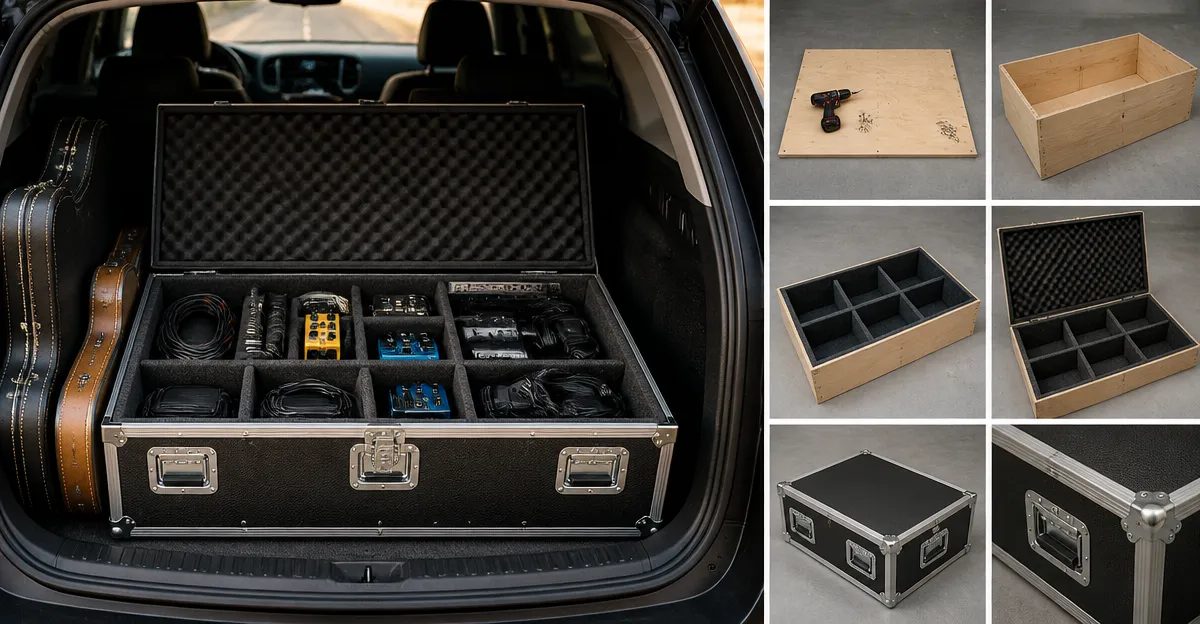
How to Build a Soundproof Trunk Organizer for Touring Musicians: DIY Guide to Protect Gear and Reduce Road Noise
Introduction
Touring musicians frequently transport delicate instruments, amplifiers, and recording equipment in the limited space of a vehicle trunk. Uncontrolled vibrations and road noise can damage delicate components and degrade performance during live shows. This guide teaches a practical, step‑by‑step process to convert a conventional trunk organizer into a sound‑proofed storage solution. By the end of the article, readers will understand how to select the right base, apply acoustic treatments, and secure the system for reliable, long‑term use.
What You’ll Need
- Sturdy base organizer (e.g., Gorilla Grip Trunk Organizer)
- Mass loaded vinyl (MLV) sheets – 1/8 inch thick, 60 lb per square yard
- Acoustic foam panels – 2‑inch thickness, high‑density
- Weatherstripping tape – self‑adhesive, 1‑inch wide
- Heavy‑duty Velcro straps or cargo straps
- Utility knife, measuring tape, marker, and screwdriver
- Optional: additional organizer such as Sposuit Trunk Organizer for larger vehicles
Step 1: Assess Trunk Space and Acoustic Requirements
Begin by measuring the interior dimensions of the trunk, noting length, width, and height. Record the volume in cubic feet; this information determines how many acoustic panels can be accommodated without sacrificing cargo capacity. Next, identify the most noise‑sensitive items—typically guitars, pedals, and portable mixers—and prioritize protection for those zones. Understanding the space constraints enables you to select a base organizer that fits snugly while leaving room for sound‑absorbing layers.
Step 2: Choose a Sturdy Base Organizer
The foundation of any sound‑proof system must be robust enough to support added weight from acoustic materials. The Gorilla Grip Trunk Organizer offers a thick corrugated‑plastic construction that holds up to 60 lb per panel, far exceeding the capacity of typical cardboard units. Its non‑slip feet and adjustable cargo straps keep the organizer from shifting during acceleration, which is essential when the trunk is loaded with heavy MLV sheets. At a price of $35.99 and a rating of 4.8/5 from 1,348 reviews, it provides excellent value for musicians who need durability and stability.
If the vehicle is a larger SUV or you require additional compartments, the Sposuit Trunk Organizer delivers 70 L of capacity, eight side pockets, and reinforced handles for easy removal. Priced at $20.69 with a 4.8/5 rating from 3,854 reviewers, it is a cost‑effective alternative for those who need extra storage without sacrificing strength.
Step 3: Add Mass Loaded Vinyl (MLV) Panels
Mass loaded vinyl is the core sound‑blocking material; its dense, flexible nature prevents low‑frequency vibrations from passing through the trunk walls. Cut the MLV to match the interior dimensions of the chosen organizer, leaving a ½‑inch clearance on each side to allow for later sealing. Secure the sheets to the organizer’s side panels using industrial‑strength double‑sided tape or the included Velcro straps. The added mass increases the overall weight, so verify that the organizer’s load rating is not exceeded—both the Gorilla Grip and Sposuit models comfortably support the typical MLV load of 15‑20 lb.
When installing MLV, orient the material so that the embossed side faces outward; this orientation maximizes damping while maintaining a smooth interior surface for the next layer of acoustic foam.
Step 4: Install Acoustic Foam Lining
Acoustic foam absorbs mid‑range frequencies and reduces reverberation inside the trunk, protecting delicate electronics from resonant vibrations. Measure each compartment of the base organizer and cut foam panels to fit tightly against the MLV backing. Attach the foam using spray adhesive or the removable Velcro strips that come with many organizers, ensuring a secure yet removable bond. For a typical 2‑compartment organizer, three to four 2‑inch foam panels per side provide sufficient coverage without overly reducing cargo space.
The foam also creates a cushioned cradle for instruments, preventing direct contact with hard surfaces that could cause scratches or dents during transit.
Step 5: Seal Gaps with Weatherstripping
Even small gaps around the organizer’s perimeter can allow noise to leak, undermining the sound‑proofing effort. Apply self‑adhesive weatherstripping tape along the edges of the organizer where it meets the trunk walls. Press firmly to create an airtight seal; this also helps keep dust and moisture out of the acoustic layers. Weatherstripping is inexpensive, widely available at automotive stores, and adds a professional finish to the installation.
Step 6: Secure the Assembly with Straps
After the acoustic layers are in place, reinforce the organizer’s stability by tightening the cargo straps included with the Gorilla Grip or Sposuit units. Loop the straps over the organizer’s reinforced buckles and anchor them to the trunk’s built‑in tie‑down points. This step prevents the entire assembly from shifting during sharp turns, sudden stops, or highway vibrations—conditions common on tour routes. Properly tensioned straps also distribute the added weight of MLV and foam evenly across the trunk floor, preserving vehicle handling.
Step 7: Test and Fine‑Tune the System
Before loading valuable gear, conduct a road test to evaluate noise reduction. Play a guitar or run a small amplifier while driving at varying speeds and listen for rattles or vibration‑induced distortion. If any components shift, adjust the straps or add additional Velcro patches. For persistent low‑frequency hum, consider adding a thin layer of additional MLV on the trunk’s floor beneath the organizer.
Document the final configuration—measurements of acoustic panels, strap tension, and any supplemental sealing—so you can replicate the setup in other vehicles or after maintenance.
Tips & Pro Tips
- Label each compartment with removable stickers to quickly locate pedals, cables, and spare strings during fast load‑outs.
- Use zip‑top bags for moisture‑sensitive items such as electronic pedals; place them inside the foam‑lined compartments for added protection.
- When traveling in extreme temperatures, choose MLV with a temperature‑resistant coating to avoid brittleness.
- Consider adding a thin layer of reflective foil between MLV and foam to improve thermal insulation for temperature‑sensitive gear.
- Periodically inspect the non‑slip feet and Velcro straps for wear; replace them before they lose adhesion.
Troubleshooting
| Problem | Possible Cause | Solution |
|---|---|---|
| Organizer slides during cornering | Insufficient cargo strap tension or worn non‑slip feet | Re‑tighten straps, replace feet with new rubber pads, or add extra Velcro strips. |
| Persistent rattling sounds | Gaps between MLV and trunk walls | Apply additional weatherstripping or foam filler to seal the gaps. |
| Excessive weight reduces fuel efficiency | Too many acoustic layers | Reduce foam thickness or use a lighter‑weight acoustic blanket while maintaining core MLV coverage. |
Conclusion
By following this DIY guide, touring musicians can transform a standard trunk organizer into a robust, sound‑proofed storage system that safeguards valuable gear and minimizes road noise. The combination of a heavy‑duty base, mass loaded vinyl, acoustic foam, and secure strapping delivers professional‑grade protection without the expense of a custom‑built case. Musicians are encouraged to adapt the steps to their specific vehicle and equipment, ensuring a personalized solution that travels as reliably as their music.
Products Mentioned in This Guide
Frequently Asked Questions
What type of base organizer works best for a sound‑proof trunk project?
A sturdy, modular organizer like the Gorilla Grip Trunk Organizer provides a solid frame and compartments for acoustic layers.
How thick should the mass loaded vinyl be for effective road‑noise reduction?
Use 1/8‑inch MLV (about 60 lb/yd²) to add mass without overly increasing weight.
Can I use regular foam instead of high‑density acoustic foam?
High‑density 2‑inch acoustic foam absorbs more vibration; regular foam is less effective for soundproofing.
How do I seal gaps to prevent noise leakage?
Apply 1‑inch self‑adhesive weatherstripping tape around the organizer’s edges and any seams.
What’s the best way to secure the finished organizer in the trunk?
Fasten it with heavy‑duty Velcro or cargo straps to keep the acoustic layers from shifting during travel.