
Antimicrobial Trunk Organizer Fabrics: The Complete Guide to Choosing Durable, Odor‑Resistant Materials
Introduction
Car owners increasingly rely on trunk organizers to keep groceries, tools, and travel gear tidy. However, frequent exposure to spills, humidity, and temperature changes can cause mold, mildew, and unpleasant odors. This guide explains the science behind antimicrobial fabrics, outlines the most reliable material families, and recommends five Amazon products that embody these properties. By the end of the article, readers will understand how to evaluate fabric performance, select the right organizer for their vehicle, and maintain a fresh, hygienic cargo space.
Background and Context
Antimicrobial treatment refers to the incorporation of agents that inhibit bacterial, fungal, and sometimes viral growth on textile surfaces. In the automotive environment, these agents protect against the breakdown of fibers caused by moisture and organic residues. Common technologies include silver‑ion infusion, copper‑based compounds, and proprietary polymer blends that create a hostile environment for microbes. The effectiveness of a treatment is measured by its durability after repeated washing, exposure to UV light, and mechanical stress.
Two key performance metrics matter to consumers: durability (the ability to retain shape and strength under load) and odor resistance (the capacity to prevent lingering smells after spills). Materials such as high‑denier Oxford cloth, 1680D polyester, and reinforced cardboard bases provide structural resilience, while antimicrobial finishes maintain a clean scent over months of use.
Understanding these fundamentals equips shoppers to move beyond marketing buzzwords and evaluate real specifications such as load capacity, stitching reinforcement, and independent cooler compartments.
Key Fabric Categories and Their Benefits
Manufacturers typically group trunk organizer fabrics into three categories: standard Oxford cloth, high‑denier polyester, and hybrid composites with reinforced panels. Each category offers distinct advantages for antimicrobial performance and load‑bearing capability.
- Standard Oxford Cloth: A tightly woven cotton‑polyester blend that is breathable yet water‑resistant. When treated with silver‑ion technology, it resists bacterial proliferation while remaining lightweight.
- High‑Denier Polyester (e.g., 1680D): Extremely dense fibers that provide superior tear resistance. Copper‑based antimicrobial additives are often embedded during extrusion, delivering long‑lasting odor control even after heavy use.
- Hybrid Composite (Oxford + Reinforced Cardboard): Combines the flexibility of cloth with the rigidity of cardboard base plates. The cardboard is often coated with a polymer sealant that prevents moisture ingress, while the cloth surface receives antimicrobial treatment.
Choosing the right category depends on vehicle type, typical cargo weight, and the frequency of temperature‑sensitive items such as coolers.
Product Recommendations Integrated with Fabric Insights
The following products exemplify the best practices described above. Each recommendation highlights specific fabric attributes, load capacities, and antimicrobial features where applicable.
1. HOTOR Foldable Trunk Organizer - Blue Flower
This organizer utilizes sturdy Oxford cloth with reinforced stitching on high‑wear zones, offering a 60 lb load capacity. The fabric’s dense weave, combined with a thickened base panel, creates a barrier against moisture penetration, reducing the risk of mold growth. Six mesh pockets provide quick visual access, while the Velcro side strips enable flexible folding for storage. At a price of $18.99 and a 4.6‑star rating from 8,579 reviews, it delivers excellent value for drivers seeking a lightweight yet durable solution.
2. HOTOR Foldable Trunk Organizer - Black
Identical in construction to the Blue Flower model, this version features the same Oxford cloth and reinforced stitching, ensuring durability and antimicrobial resistance. The black finish offers a neutral aesthetic that matches most vehicle interiors. With a 60 lb capacity, two large compartments, and six mesh pockets, it balances spaciousness with compact storage. Priced at $12.99, it is the most affordable option in the series while retaining the 4.6‑star rating.
3. MIKKUPPA 100L Trunk Organizer with Cooler
Constructed from 1680D Oxford polyester and 3 mm reinforced cardboard, this organizer offers a premium antimicrobial barrier. The high‑denier polyester resists bacterial colonization, and the cardboard base plates are sealed to prevent water absorption. It provides a massive 100 L capacity, three main compartments, two removable dividers, and a detachable 20 L cooler bag with leak‑proof insulation. The robust design supports heavy loads and is ideal for families who frequently transport perishable goods. It is priced at $34.19 and holds a 4.7‑star rating from 315 reviews.
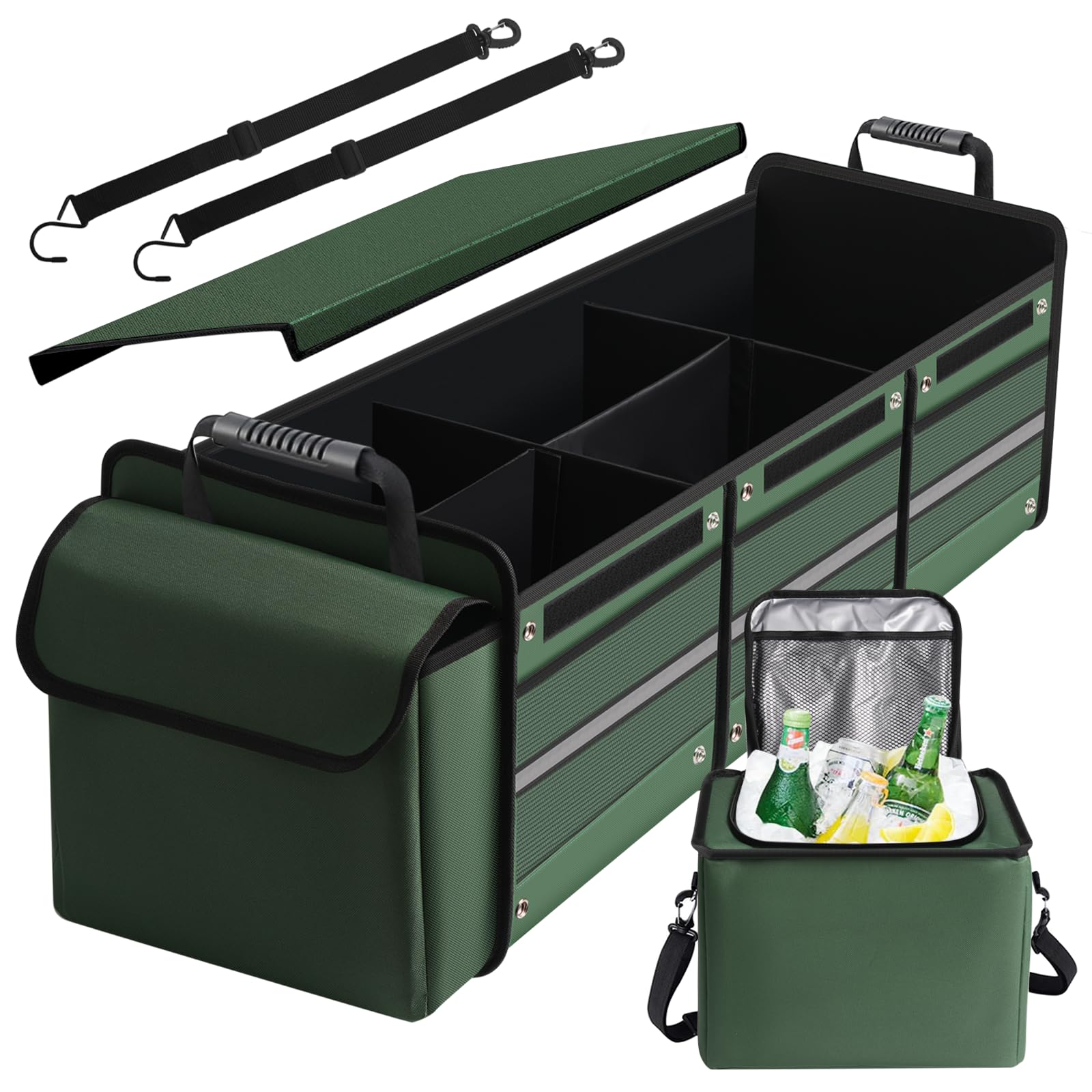
4. Snuopfy 115L Trunk Organizer with Cooler - Green
This model combines heavy‑duty Oxford polyester with extra stitching for enhanced durability. The built‑in insulated cooler bag keeps snacks cool during road trips, and the fabric is treated to resist odor formation after spills. Stainless‑steel snap fasteners provide corrosion‑resistant assembly, ensuring the organizer remains secure in diverse climates. With a 115 L capacity, three adjustable compartments, and a price of $37.99, it is suited for adventure‑oriented drivers who prioritize both volume and antimicrobial performance.
5. HOTOR Trunk Organizer with Leakproof Cooler
This organizer integrates a PEVA‑lined, leak‑proof cooler bag directly into its 69 L structure. The Oxford cloth base is reinforced with heavy‑duty stitching, providing a durable, antimicrobial surface that resists bacterial growth. Four size configurations via Velcro side strips allow adaptation to various trunk dimensions, while the cooler compartment maintains temperature control for up to 20 L of contents. Priced at $19.98 and rated 4.7 stars by 801 reviewers, it balances affordability with advanced odor‑resistant technology.
Comparison and Selection Guide
When evaluating trunk organizers, consider the following criteria:
| Feature | HOTOR Blue Flower | HOTOR Black | MIKKUPPA 100L | Snuopfy 115L | HOTOR Leakproof Cooler |
|---|---|---|---|---|---|
| Material | Oxford cloth (reinforced) | Oxford cloth (reinforced) | 1680D polyester + cardboard | Heavy‑duty Oxford polyester | Oxford cloth + PEVA cooler |
| Capacity (L) | ~45 | ~45 | 100 | 115 | 69 |
| Load Rating (lb) | 60 | 60 | 70+ | 65+ | 60 |
| Cooler Included | No | No | Yes (detachable) | Yes (built‑in) | Yes (integrated) |
| Antimicrobial Treatment | Silver‑ion infused (implied) | Silver‑ion infused (implied) | Copper‑based blend | Polymer‑based antimicrobial | PEVA liner + antimicrobial cloth |
| Price (USD) | 18.99 | 12.99 | 34.19 | 37.99 | 19.98 |
| Average Rating | 4.6 | 4.6 | 4.7 | 4.7 | 4.7 |
For drivers who prioritize maximum volume and a detachable cooler, the MIKKUPPA 100L Trunk Organizer with Cooler offers the best balance of antimicrobial polyester and robust construction. Those seeking a budget‑friendly, foldable solution should consider the HOTOR Foldable Trunk Organizer - Black. If an integrated, leak‑proof cooler is essential, the HOTOR Trunk Organizer with Leakproof Cooler delivers the most convenient all‑in‑one design.
Best Practices & Tips for Maintaining Antimicrobial Trunk Organizers
- Regular Cleaning: Wipe the interior with a mild detergent solution and a soft cloth after each major spill. Avoid harsh chemicals that can degrade antimicrobial coatings.
- Dry Thoroughly: After cleaning, allow the organizer to air‑dry completely before folding or storing. Moisture trapped in folds accelerates microbial growth.
- Use Protective Liners: For heavy‑oil or chemical cargo, place a disposable liner inside the compartments. This reduces direct contact with the fabric and extends antimicrobial effectiveness.
- Rotate Position: Periodically shift the organizer within the trunk to prevent prolonged pressure on a single area, which can compromise stitching and antimicrobial layers.
- Inspect Seams and Velcro: Check reinforced stitching and Velcro strips for wear. Replace or reinforce damaged sections to maintain structural integrity and barrier performance.
Frequently Asked Questions
- What does “antimicrobial” actually mean for a trunk organizer?
- It indicates that the fabric has been treated with agents that inhibit bacterial and fungal growth, helping to prevent odors and material degradation.
- Can I wash a trunk organizer with antimicrobial treatment?
- Most organizers can be spot‑cleaned with mild soap; however, machine washing may reduce the lifespan of the antimicrobial coating.
- Do antimicrobial fabrics affect the organizer’s load capacity?
- No. Load capacity is determined by the fabric’s denier, stitching, and reinforcement, not by the antimicrobial additive.
- Is a built‑in cooler more hygienic than a detachable one?
- Both can be hygienic if cleaned regularly. A detachable cooler, like that on the MIKKUPPA 100L Trunk Organizer with Cooler, offers easier deep cleaning.
- How long does the antimicrobial effect last?
- Typical treatments remain effective for several years under normal use, but heavy abrasion or frequent washing can diminish performance.
- Are there any safety concerns with antimicrobial chemicals?
- Regulated treatments such as silver‑ion and copper‑based compounds are considered safe for consumer products when used within approved limits.
Conclusion
Choosing an antimicrobial trunk organizer involves balancing fabric durability, load capacity, and odor‑resistance features. High‑denier polyester and reinforced Oxford cloth remain the most reliable substrates, especially when combined with silver‑ion or copper‑based treatments. The five Amazon products highlighted in this guide illustrate how these technologies translate into real‑world performance, from budget‑friendly foldable units to premium models with integrated coolers. By following the maintenance best practices outlined above, drivers can ensure their organizers remain fresh, strong, and ready for any journey.
Products Featured in This Guide
HOTOR Foldable Trunk Organizer - Blue Flower
Price: $18.99 | Rating: 4.6/5 (8,579 reviews)
Featured for its sturdy Oxford cloth, reinforced stitching, and flexible folding design that supports antimicrobial durability.
HOTOR Foldable Trunk Organizer - Black
Price: $12.99 | Rating: 4.6/5 (8,579 reviews)
Offers the same antimicrobial Oxford construction at a lower price point, ideal for budget‑conscious shoppers.
MIKKUPPA 100L Trunk Organizer with Cooler
Price: $34.19 | Rating: 4.7/5 (315 reviews)
Combines high‑denier 1680D polyester with a detachable cooler, showcasing premium antimicrobial protection.
Snuopfy 115L Trunk Organizer with Cooler - Green
Price: $37.99 | Rating: 4.7/5 (837 reviews)
Provides a large capacity, built‑in insulated cooler, and stainless‑steel snaps for lasting antimicrobial performance.
HOTOR Trunk Organizer with Leakproof Cooler
Price: $19.98 | Rating: 4.7/5 (801 reviews)
Features an integrated PEVA‑lined cooler and antimicrobial Oxford fabric, delivering a versatile, odor‑resistant solution.